
What I Would Tell a Small Business Owner Before They Build an AI Assistant
Eighth in the Hermes Journey series.
Summary: After building Storm into a working AI operations layer, my advice to small business owners is simpler than the AI market makes it sound: start with recurring work, approval boundaries, memory, and review loops before chasing tools.
Practical takeaway: The best first AI assistant is not the flashiest one; it is the one attached to a real recurring workflow with clear human approval.
If a small business owner asked me where to start with an AI assistant, I would not start with the model.
That might sound strange coming from someone who has spent a lot of time building around Hermes, Storm, skills, memory, voice, dashboards, bots, and recurring jobs. I care about the technology. I enjoy the technology. But the technology was never the hardest part.
The harder part was figuring out what work deserved an assistant.
Most business owners do not need another place to type prompts. They need help with the work that keeps slipping: follow-ups, meeting notes, content drafts, proposal cleanup, recurring reminders, research capture, status checks, inbox triage, and the small operational loops that are too important to ignore but too fragmented to manage cleanly.
That is where I would start.
Pick one recurring workflow that already matters. Not a fantasy workflow. Not “AI will run my company.” Something real. A meeting becomes notes, decisions, and follow-ups. A transcript becomes a client-specific summary. A blog idea becomes a draft for review. A prospect conversation becomes a next-step reminder. A weekly review becomes a short plan instead of a vague sense of being behind.
Then ask what the assistant needs in order to do that work responsibly.
It probably needs memory, but not unlimited memory. It needs to remember your preferences, recurring contacts, tone, business priorities, and rules of engagement. It does not need to remember every raw detail forever. Good memory is compact and useful. Bad memory is a junk drawer with confidence.
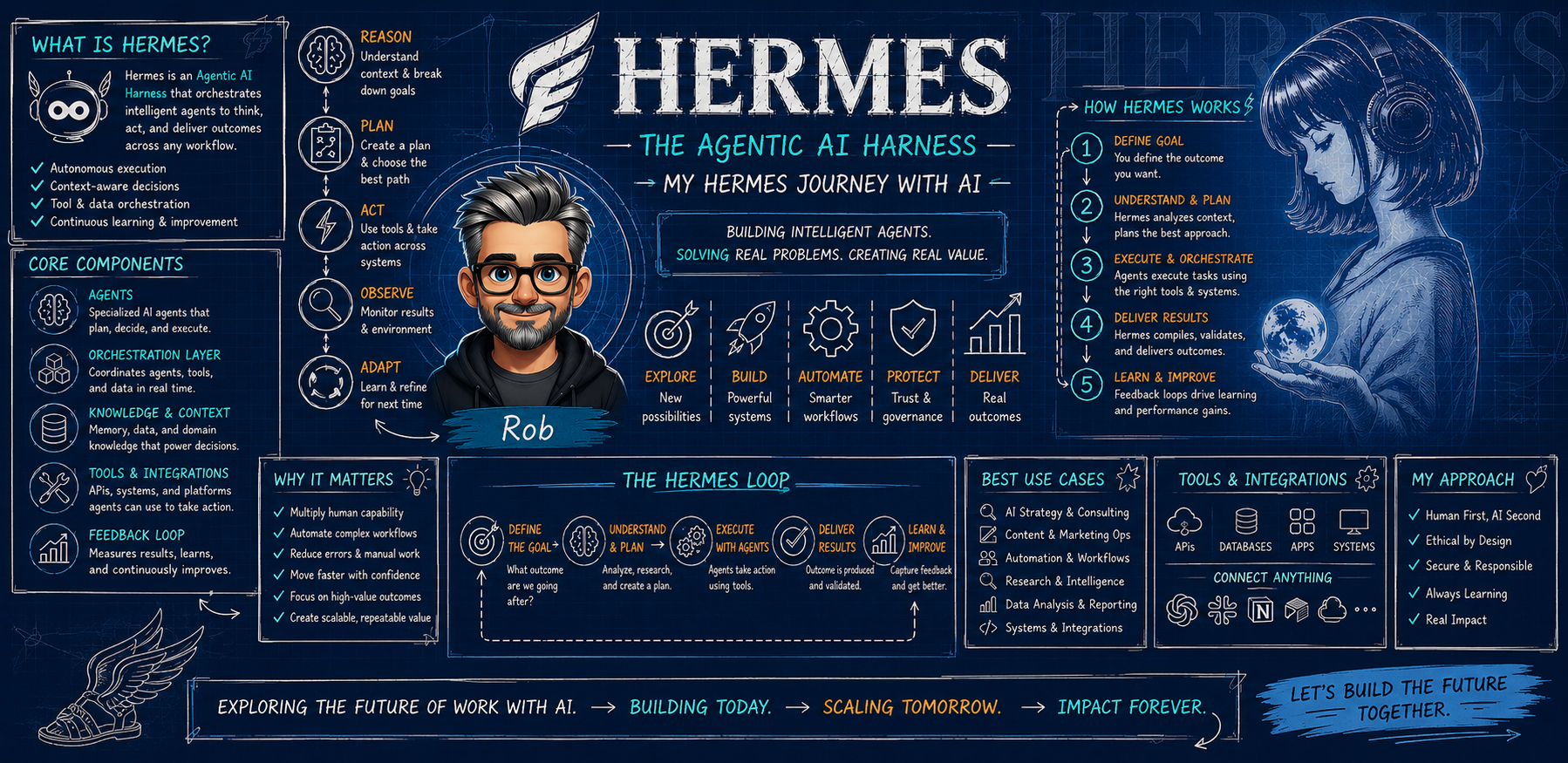
It probably needs skills or procedures. This was one of the biggest shifts for me. The first time an assistant solves something, that is helpful. The fifth time it solves the same class of thing from scratch, that is waste. A practical system should turn repeatable lessons into reusable workflows: how to draft in my voice, how to check a WordPress post, how to handle a transcript, how to run a safe update, how to stop before a risky action.
It definitely needs approval boundaries.
This is the part I would emphasize most to non-technical leaders. Do not let the AI market push you into a false choice between “do nothing” and “let the agent do everything.” There is a much better middle ground: let the assistant prepare, organize, draft, check, and recommend; require human approval for sending, deleting, publishing, purchasing, or making changes that affect other people.
That boundary does not slow the system down as much as people think. In my experience, it makes the system easier to use because I am not constantly worried about what it might do behind my back. Storm can work hard because Storm also knows when to stop.
The next thing I would tell a business owner is to build around review, not magic.
If AI drafts an email, review the tone. If it summarizes a meeting, spot-check the transcript. If it posts a blog draft, verify it is still a draft. If it updates a dashboard, check the public page. If it recommends a next step, ask what evidence supports it. This is not distrust. This is management.
We already manage human work this way. We review, approve, delegate, and improve. AI does not remove that responsibility. It gives us a new kind of teammate that needs clear operating rules.
Only after that would I talk about interfaces. Voice is useful when I am moving quickly. Desktop is useful when I need a richer surface. Bots are useful when different roles need different defaults. Dashboards are useful when the system needs to be observable. Messaging channels are useful when work should meet me where I already am. But none of those are the starting point.
The starting point is the work.
One of the mistakes I made early was being too impressed by what AI could do in isolation. A model could write, summarize, plan, code, and reason. That was impressive. But it did not automatically change my day. The change happened when those capabilities were attached to a workflow I already cared about and surrounded by enough memory, process, and guardrails to make them dependable.
That is why I keep using the phrase AI operations. It is less exciting than “agentic AI,” but it is more useful. Operations means the work has a place to go. It has a status. It has a next action. It has an owner. It has a way to recover when something breaks.
For a small business, that is the real opportunity. You may not need a custom assistant named Storm. You may not need a full multi-bot setup. But you probably do need a better way to capture your repeating work, preserve your context, and turn ideas into approved action without carrying everything in your head.
So my advice is simple. Choose one workflow. Write down the human approval boundary. Decide what the assistant is allowed to remember. Create a repeatable procedure. Test it on real work. Improve the loop.
Do that before you buy another tool.
If the first workflow works, add a second. If the second works, name the roles. If the roles grow, consider multiple bots or specialized assistants. Let the system earn complexity one useful loop at a time.
That is the honest version of my Hermes Journey so far. It did not start with a perfect architecture. It started with a need: stop letting important work fall through the cracks. Everything else grew from there.
Follow the Hermes Journey
I am writing these field notes for consultants, owners, and team leaders who want practical AI adoption without pretending the messy parts do not exist. If you are building toward a real assistant, workflow, or approval system of your own, follow the series at the Hermes Journey page or reach out and let’s talk about what would actually fit the way you work.