
The Recovery Loop: Why Safe Upgrades Taught Me More Than Clean Demos
Seventh in the Hermes Journey series.
Summary: The most useful part of my AI operations system is not that everything always works. It is that failures get captured, diagnosed, repaired, and turned into better procedures without crossing the human approval boundary.
Practical takeaway: A dependable AI assistant is not one that never fails; it is one that can help you recover safely, explain what happened, and improve the playbook.
Clean demos are comforting. Real systems are educational.
That has been one of the biggest lessons of my Hermes Journey. The moments that taught me the most were not the moments when Storm produced a polished answer on the first try. They were the moments when something failed, and the system had to help me understand what happened without making the situation worse.
Safe upgrades are a perfect example.
Upgrading an AI agent sounds like a technical maintenance task. Pull the latest code, rebuild what needs rebuilding, run a few checks, and move on. In practice, upgrades reveal how much of the system is actually a system. Are local changes preserved? Are backups real or only assumed? Are background processes holding files open? Do dashboards restart cleanly? Does the assistant know the difference between the core gateway being healthy and a local surface being stale? Does it stop when a command needs approval?
Those questions are not side issues. They are the work.
A lot of AI adoption advice skips this layer. It focuses on prompting, tool choice, or the newest model. Those things matter, but they do not answer the question every serious user eventually faces: what happens when the automation gets stuck?
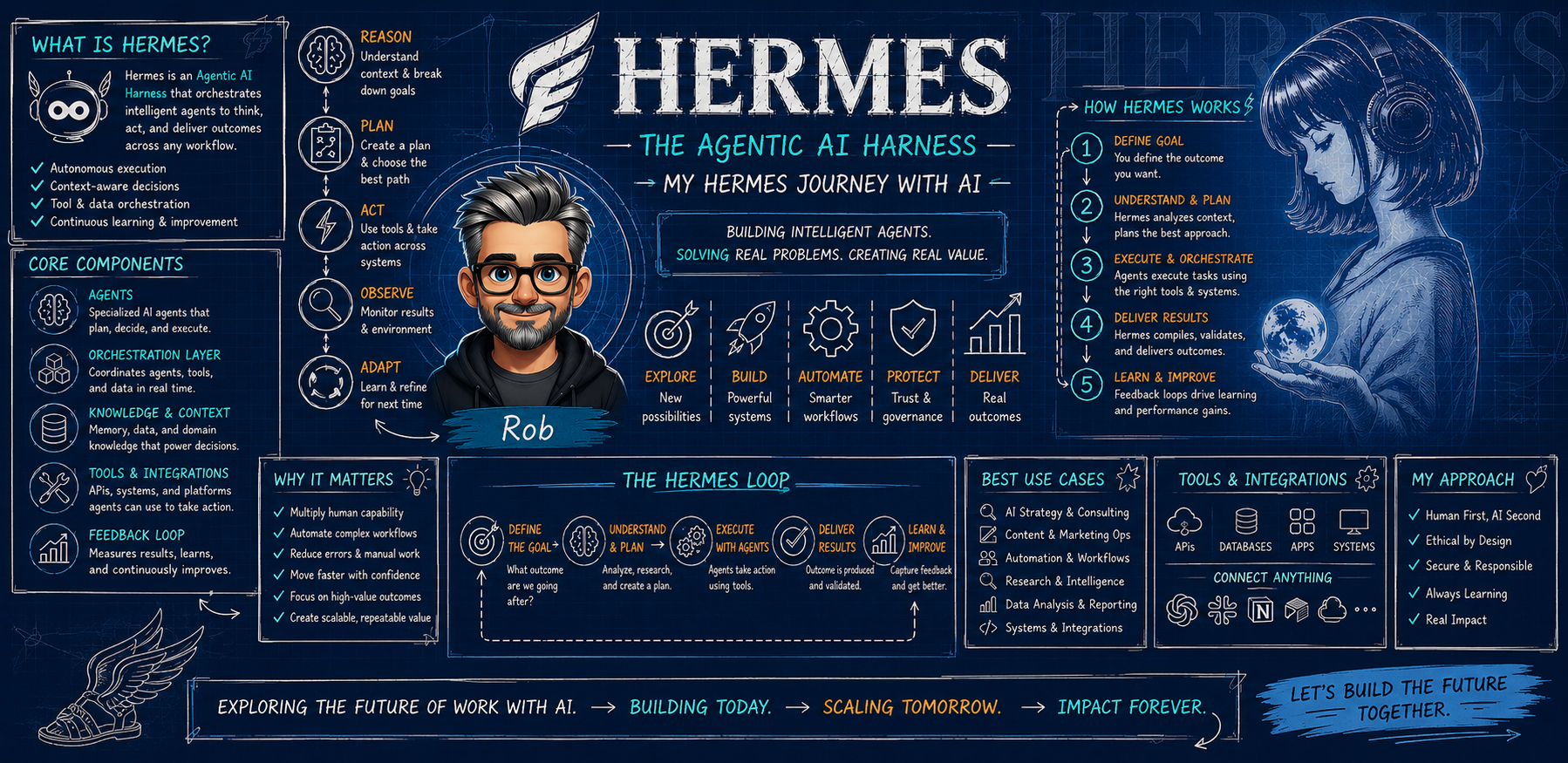
In my setup, the answer has become a recovery loop. Capture the failure. Preserve the evidence. Identify the safest next action. Ask for approval when the action crosses a boundary. Make the repair. Verify the result. Update the playbook if the fix taught us something durable.
That loop sounds simple, but it changes the relationship with the assistant.
Without a recovery loop, a failure feels like a reason to distrust the whole system. With a recovery loop, a failure becomes a case. It can be diagnosed. It can be compared with previous cases. It can teach the assistant what to check next time. It can become a skill, a reference note, or an updated maintenance script.
The human approval boundary is what keeps that loop safe. If Storm needs to read logs, check process state, inspect a dashboard, or run a harmless health check, that is one class of work. If it needs to stop a process, restart a service, post to a live website, or change a configuration, that is another class. The system should not pretend those are the same.
This is where I have become less interested in “fully autonomous” as a slogan. Full autonomy sounds impressive until you are the person responsible for the business, the client relationship, the public website, or the data. I do not want an assistant that barrels ahead because it can. I want one that knows when to proceed and when to bring me into the loop.
The irony is that this makes the assistant more useful, not less. Because the boundaries are clear, I can trust it with more. I can say, “initiate the safe upgrade,” and expect a process: backup, preserve local changes, update, smoke test, verify surfaces, report warnings separately from failures. If something needs approval, it stops. If a test is unavailable, it says so instead of pretending. If a dashboard is still running but stale, it treats listening as different from healthy.
That is the kind of behavior that matters in real adoption.
The latest Hermes upgrade reinforced this for me. The system could be current and still have a desktop runtime problem. A dashboard could return 200 and still have process-detection noise that needed repair. A Plaud history page could show zeroes even though the recordings existed. None of those issues are solved by a more clever answer. They are solved by operational discipline.
For small businesses, this may be the most transferable lesson from my setup. You do not need my exact tools. You do need a recovery philosophy.
If you use AI to draft client emails, what is the recovery loop when it gets tone wrong? If you use AI to summarize meetings, what happens when a transcript is missing or speaker attribution is uncertain? If you use AI to maintain a content calendar, how do you catch a draft before it publishes with an unsupported claim? If you use AI to update a website, where is the backup and who approves the change?
Those questions are not anti-AI. They are what make AI practical.
A recovery loop also protects momentum. Without it, every failure becomes a vague disappointment. With it, failures become improvements. The system learns that a certain command needs a different wrapper on Windows. A dashboard check learns to verify HTTP response, not just process presence. A content workflow learns to draft locally before posting to WordPress. A voice workflow learns when to mute and fall back to text.
That is how an assistant becomes dependable over time.
I still like clean demos. They are useful for showing what is possible. But I do not build around them anymore. I build around the Tuesday afternoon version of the problem, when something is half-working, I am busy, and I need the system to be honest about what it knows.
The recovery loop is not the glamorous part of the Hermes Journey. It may be the most important part.
This is also why I do not want failure hidden from me. A system that hides its rough edges may feel impressive for a week, but it teaches me nothing. A system that can say, clearly, what failed and what it checked becomes more valuable over time. It gives me a way to build confidence from evidence instead of from vibes.
The same principle applies outside of software maintenance. A sales workflow needs recovery when a follow-up stalls. A content workflow needs recovery when an image is missing. A meeting workflow needs recovery when a transcript is incomplete. The more I work with Storm, the more I see recovery not as a technical afterthought, but as the real operating model.
Follow the Hermes Journey
I am writing these field notes for consultants, owners, and team leaders who want practical AI adoption without pretending the messy parts do not exist. If you are building toward a real assistant, workflow, or approval system of your own, follow the series at the Hermes Journey page or reach out and let’s talk about what would actually fit the way you work.