
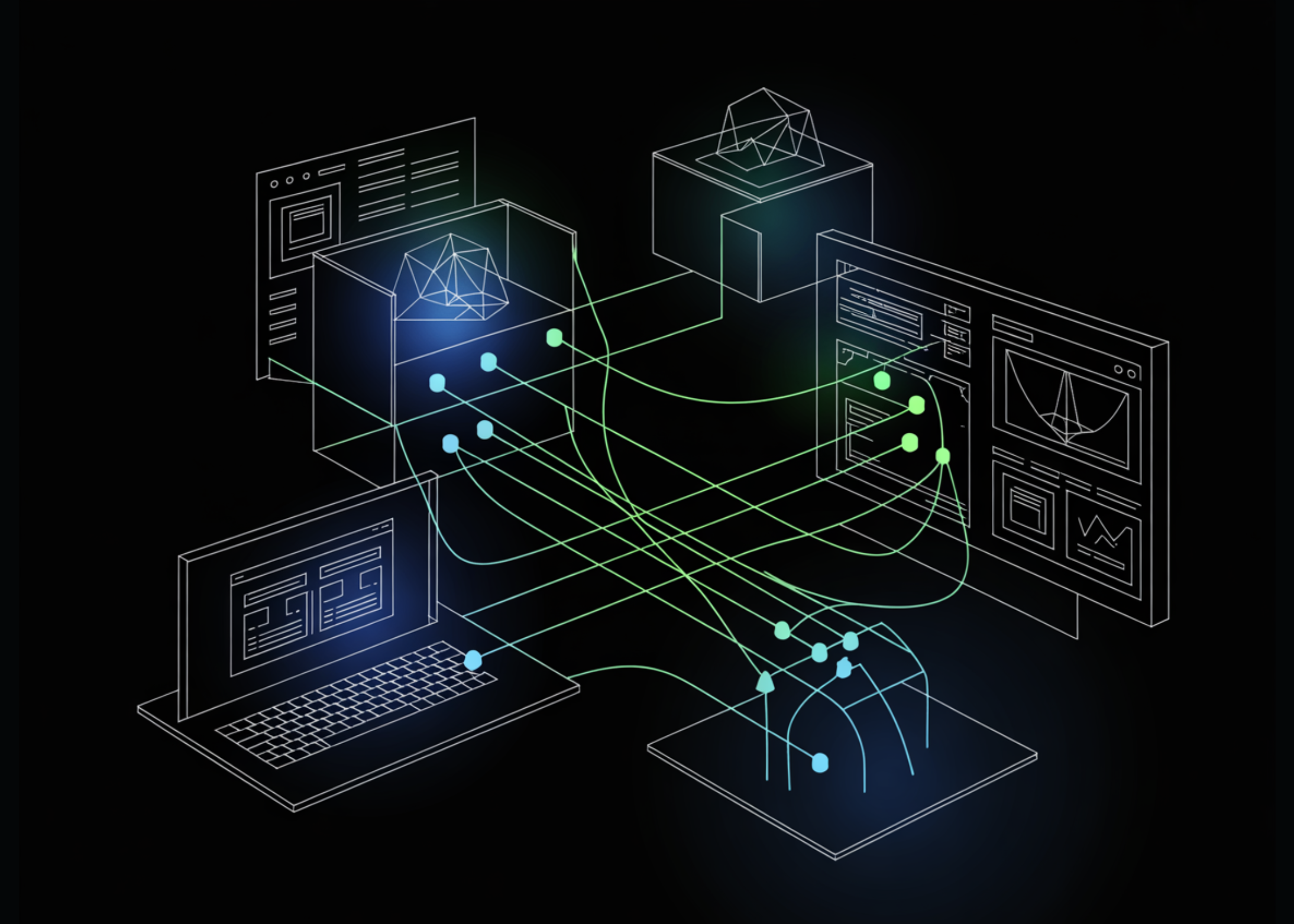
Perplexity has moved Deep Research into Computer, its multi-model orchestration system. The upgrade improves accuracy, depth of analysis, and citation quality. Deep Research now breaks hard questions into subtasks and routes them across 20+ frontier models. It returns work-ready reports, decks, and dashboards, all inside Computer.
Deep Research in Computer
Deep Research is a mode that runs many searches, reads sources, and writes a cited report. The new version lives inside Perplexity Computer, which launched in late February 2026. Computer is a cloud system that coordinates up to 20 AI models in one workflow. It is model-agnostic, with Opus 4.6 as its core reasoning engine. Sub-agents handle specialized work, such as Gemini for deep research tasks.
Deep Research in Computer is built on two parts: the Agent Search SDK and Search as Code. With one complex question, it builds a research plan automatically. It then finds primary sources across hundreds of sites and cites every claim.
Search as Code: How It Works
The model writes code that assembles the search itself. That code runs thousands of retrieval steps in parallel, tailored to each question. The script runs in a sandbox and calls Perplexity’s Agentic Search SDK. The SDK exposes search primitives such as filtering, deduplication, and reranking. This differs from a fixed pipeline that runs the same steps every time. Code-driven search lets the system branch, compare, and refine as it learns.
Search as Code is rolling out through both Computer and the Agent API. So developers can reach the same agentic search stack programmatically. Computer also reads your files alongside the live web. You can pull in a PDF or spreadsheet for internal context. It then cross-references that against census data, Statista, and other sources.
A Working Developer Example
Deep Research in Computer is a consumer feature for Perplexity Max users. Developers reach the same stack through the pay-as-you-go Agent API. The official SDK ships a deep-research preset, shown below.
# pip install perplexityai
# export PERPLEXITY_API_KEY="your_api_key_here"
from perplexity import Perplexity

client = Perplexity()  # reads PERPLEXITY_API_KEY from the environment

response = client.responses.create(
    preset="deep-research",  # pre-configured research setup; "pro-search" is another
    input="Compare the cash flow and profit margins of the largest AI chip makers.",
)

print(response.output_text)  # aggregated report text from the run
The endpoint is POST https://api.perplexity.ai/v1/agent. It also accepts POST /v1/responses for OpenAI SDK compatibility.
Benchmark
Perplexity published before-and-after numbers comparing legacy Deep Research with the Computer version. The gains are largest on agentic browsing, where the system must navigate many pages.
| Benchmark | Source | Legacy Deep Research | Deep Research in Computer |
|---|---|---|---|
| Humanity’s Last Exam | Center for AI Safety & Scale AI | 36.4% | 50.5% |
| BrowseComp | OpenAI | 40.7% | 83.8% |
| DeepSearchQA | Google DeepMind | 81.9% | 85.0% |
BrowseComp tests an agent’s ability to find hard-to-locate information through browsing. The jump from 40.7% to 83.8% is the largest gain shown. Humanity’s Last Exam covers expert questions across many academic subjects. DeepSearchQA already sat high, so its gain is smaller but positive.
Use Cases, With Examples
Perplexity ships starter tasks that show the intended scope.
- Finance: compare cash flow and profit margins of major AI chip companies over five years.
- Legal: map how US and European data-privacy laws differ into one comparison table.
- Healthcare: synthesize clinical-trial evidence on whether weight-loss drugs improve heart health.
- Technology: benchmark leading models on reasoning ability, cost, and context length.
Each task ends in a deliverable. You can turn a report into a brief, a deck, or a live spreadsheet. Computer reads and writes inside the file, not beside it. It shows a preview before any change lands, which you approve or reject.
How It Picks Models
Computer routes each subtask to the model best suited for it. A legal reasoning model handles contract review. A data model handles spreadsheet variance checks. A writing model handles the final draft. Premium data sources back the answers, including PitchBook and CB Insights. Legal data is currently in preview.
Strengths and Limitations
Strengths:
- Code-driven search runs thousands of retrieval steps in parallel per question.
- Large measured gains on agentic browsing, led by the BrowseComp result.
- Reads internal files and the live web, citing every claim inline.
- Produces ready deliverables: reports, briefs, decks, dashboards, and live spreadsheets.
Limitations:
- The benchmark numbers are first-party, so independent verification still matters.
- The in-Computer feature centers on Perplexity Max, not a free tier.
- Premium-source coverage varies, and legal data remains in preview.
- Outputs still need human review, since “cited” does not always mean correct.
Key Takeaways
- Perplexity moved Deep Research into Computer, routing research subtasks across 20+ frontier models.
- “Search as Code” lets the model write code that runs thousands of retrieval steps in parallel.
- BrowseComp accuracy jumped from 40.7% to 83.8%; Humanity’s Last Exam rose 36.4% to 50.5%.
- It reads your files and the live web, citing every claim across reports, decks, and dashboards.
- Developers can reach the same agentic search stack through the pay-as-you-go Agent API.
Check out the Technical details. Also, feel free to follow us on Twitter and don’t forget to join our 150k+ ML SubReddit and Subscribe to our Newsletter. Wait! are you on telegram? now you can join us on telegram as well.
Need to partner with us for promoting your GitHub Repo OR Hugging Face Page OR Product Release OR Webinar etc.? Connect with us
The post Perplexity Moves Deep Research Into Computer, Routing Research Subtasks Across 20+ Frontier Models For Reports, Decks, And Dashboards appeared first on MarkTechPost.