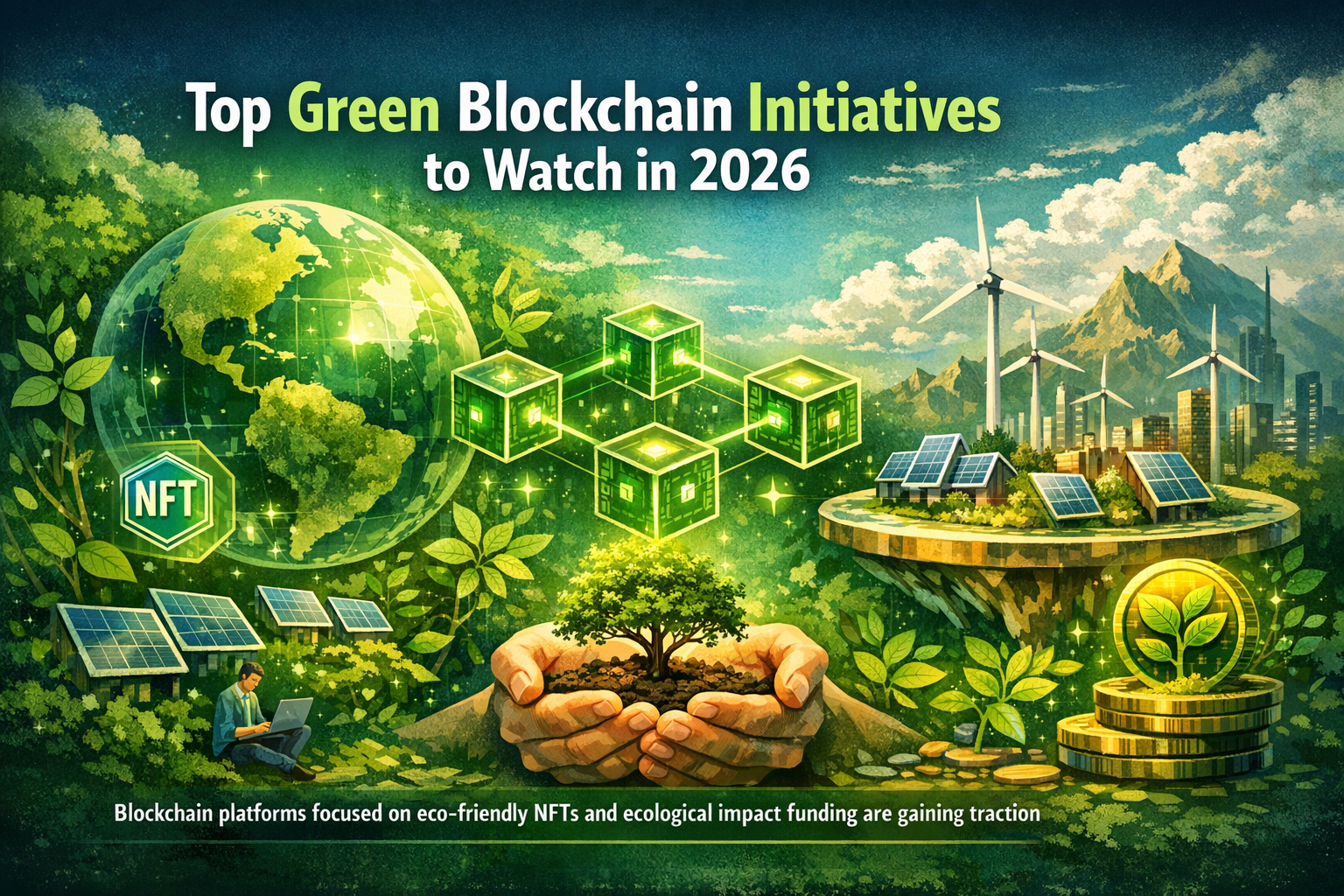
As we move deeper into 2026, the blockchain industry is undergoing a profound transformation. Once criticized for its high energy consumption and environmental footprint, the sector is now embracing sustainability as a core design principle. The image above captures this shift perfectly: a glowing digital globe intertwined with blockchain nodes, renewable energy infrastructure, and symbolic eco-assets. It reflects a new era where decentralized technologies and environmental responsibility are no longer at odds—but increasingly aligned.
Green blockchain initiatives are rapidly gaining traction across eco-friendly NFTs, climate-focused DAOs, regenerative finance (ReFi), and ecological impact funding platforms. Sustainability is no longer a niche narrative in Web3; it is becoming foundational to digital art, governance, and next-generation financial systems.
Let’s explore the top green blockchain movements and platforms shaping 2026.
1. The Rise of Eco-Friendly NFT Ecosystems
The NFT boom of the early 2020s triggered significant debate around environmental costs. However, the narrative has evolved dramatically. Today, many NFT platforms operate on energy-efficient proof-of-stake networks, reducing their carbon footprint by over 99% compared to early proof-of-work systems.
Blockchains such as Ethereum (after its transition to proof-of-stake), Tezos, and Polygon have become leading infrastructures for sustainable NFT minting.
In 2026, eco-conscious NFT marketplaces go beyond low energy usage:
Automatic carbon offset integration
On-chain transparency of environmental contributions
Royalty systems funding conservation projects
Verified “green mint” certifications
Digital artists are increasingly aligning their work with environmental activism, issuing NFTs tied to reforestation campaigns, ocean cleanup programs, and wildlife preservation initiatives. Collectors are no longer just buying art—they are funding measurable ecological impact.
2. Regenerative Finance (ReFi) Goes Mainstream
Regenerative Finance (ReFi) is one of the most powerful green blockchain narratives of 2026. Unlike traditional “sustainable investing,” ReFi focuses on actively restoring ecosystems rather than merely minimizing harm.
Platforms built on Celo and Algorand are pioneering on-chain carbon credit markets, biodiversity tokens, and decentralized climate funds.
Key developments in 2026 include:
Tokenized carbon credits with transparent verification
Biodiversity-backed tokens funding land regeneration
Smart contracts that automatically allocate yield to environmental causes
DAO-governed green infrastructure funds
The shift is philosophical as much as technical: blockchain is being positioned not only as a financial coordination tool but as an ecological coordination engine.
3. Climate DAOs and Decentralized Governance
The concept of Decentralized Autonomous Organizations (DAOs) has evolved beyond protocol governance. In 2026, climate-focused DAOs are coordinating global environmental funding efforts.
These organizations:
Pool capital from global contributors
Vote transparently on sustainability initiatives
Distribute funds to verified ecological projects
Track environmental KPIs on-chain
Climate DAOs reduce administrative overhead, increase transparency, and allow communities worldwide to directly influence environmental action. Governance tokens increasingly represent voting rights over real-world environmental impact.
The result? A more democratic and globally coordinated climate response.
4. Green Infrastructure & Real-World Asset Tokenization
Tokenization of renewable energy infrastructure is accelerating. Solar farms, wind projects, and clean water facilities are being fractionalized and funded via blockchain-based platforms.
This model:
Lowers barriers to green investing
Increases liquidity in environmental assets
Enables global participation
Improves transparency in capital allocation
By integrating IoT data with blockchain verification, investors can monitor real-time energy production and ecological metrics. Green bonds and sustainability-linked assets are becoming programmable financial instruments.
Blockchain is no longer just digital—it is increasingly embedded in real-world sustainability infrastructure.
5. Carbon-Negative and Energy-Efficient Networks
Some networks are now actively positioning themselves as carbon-negative, meaning they offset more carbon than they produce.
The image above symbolizes this synergy: blockchain nodes connected through renewable energy sources, visually reinforcing how infrastructure design matters.
In 2026, leading green networks emphasize:
Proof-of-stake consensus
Low validator hardware requirements
Renewable-powered node incentives
Carbon offset treasury allocations
Sustainability is becoming a competitive advantage in the Layer 1 and Layer 2 ecosystem.
6. Green Finance Meets Web3 Capital Markets
Traditional ESG investing is merging with decentralized finance (DeFi). Eco-focused liquidity pools, green staking mechanisms, and yield strategies tied to verified environmental impact are expanding rapidly.
Impact transparency is one of blockchain’s greatest advantages:
Every transaction is traceable
Every allocation can be audited
Environmental claims can be verified on-chain
This reduces greenwashing—a major problem in traditional sustainability markets.
In 2026, capital is flowing toward protocols that can demonstrate measurable ecological contribution rather than vague sustainability promises.
7. The Cultural Shift: Sustainability as a Core Web3 Identity
Perhaps the most important development is cultural.
In earlier blockchain cycles, the focus was speculation, speed, and scalability. Today, sustainability is part of a project’s identity from day one.
Communities increasingly ask:
Is this protocol energy efficient?
Does it fund environmental causes?
Is it aligned with regenerative principles?
Projects that ignore sustainability risk reputational damage. Those that integrate it authentically gain stronger community loyalty and institutional interest.
The fusion of digital innovation and ecological responsibility is redefining what success looks like in Web3.
The illustration at the top of this article captures a powerful message: blockchain technology and environmental sustainability are no longer opposing forces. The future of decentralized systems is green, transparent, and impact-driven.
In 2026, the most promising blockchain initiatives are not just those that scale fastest—but those that regenerate ecosystems, empower communities, and align digital finance with planetary health.