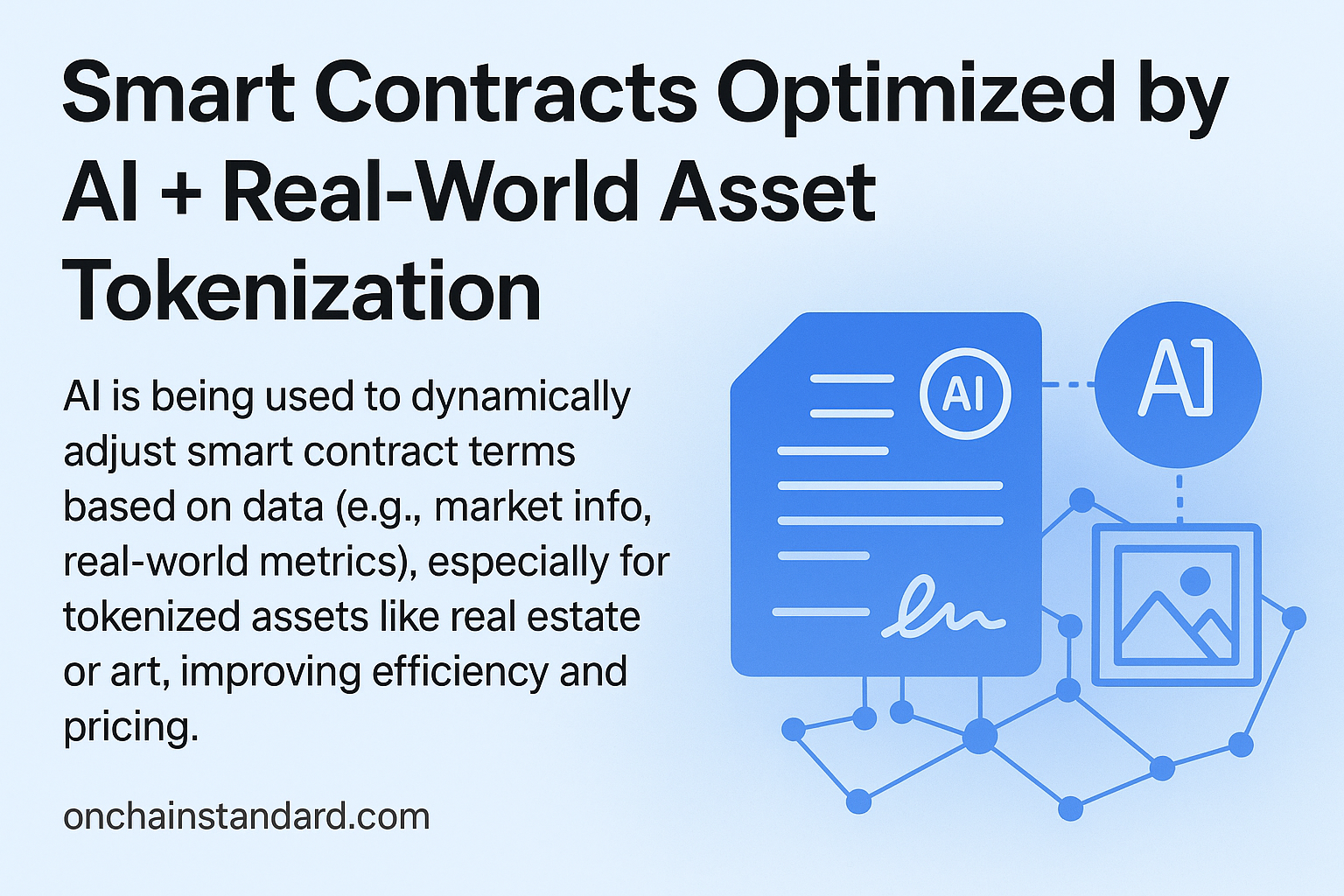
The convergence of artificial intelligence (AI) and blockchain technology is reshaping the foundations of digital finance. At the center of this transformation lies a powerful innovation: AI-optimized smart contracts combined with real-world asset (RWA) tokenization. This fusion is not just an incremental upgrade—it represents a paradigm shift in how value is created, managed, priced, and transferred across global markets.
From real estate and fine art to commodities and carbon credits, assets that were once illiquid and difficult to trade are now being transformed into programmable, AI-adjusted digital tokens. Let’s explore how this new frontier works, why it matters, and what it means for the future of decentralized finance and traditional markets alike.
Understanding Smart Contracts in the Modern Blockchain Era
Smart contracts are self-executing pieces of code deployed on a blockchain that automatically enforce agreements when predefined conditions are met. They remove the need for intermediaries, reduce operational costs, and increase transparency.
However, traditional smart contracts have one major limitation:
They are static.
Once deployed, their logic rarely changes unless manually updated. This rigidity becomes problematic when smart contracts interact with real-world markets that are dynamic, volatile, and influenced by countless external variables such as:
-
Market prices
-
Inflation rates
-
Weather conditions
-
Supply-chain disruptions
-
Interest rates
-
Geopolitical events
This is where AI enters the picture.
How AI Transforms Smart Contracts from Static Code to Living Systems
AI enables smart contracts to evolve from rigid “if-this-then-that” logic into adaptive, self-optimizing financial agents. By integrating AI models with real-time data feeds (via oracles), smart contracts can now:
-
Dynamically adjust contract parameters
-
Optimize pricing models
-
Recalculate collateral requirements
-
Predict defaults or risk events
-
Auto-rebalance asset positions
-
Detect fraudulent behavior in real time
In practical terms, this means that a smart contract is no longer just an automated agreement—it becomes a decision-making system that learns from data and adapts to market conditions.
Real-World Asset Tokenization: Bridging Physical and Digital Economies
Real-world asset tokenization refers to the process of converting ownership rights of physical or traditional financial assets into blockchain-based tokens. These tokens represent verifiable, tradable claims on real assets such as:
-
Residential and commercial real estate
-
Fine art and collectibles
-
Gold, silver, and commodities
-
Treasury bonds and private credit
-
Intellectual property and royalties
Tokenization offers massive advantages:
-
Fractional ownership: Anyone can invest with small amounts
-
Global liquidity: Assets become tradable 24/7 worldwide
-
Transparent ownership: On-chain verification removes fraud
-
Lower barriers to entry: No banks, brokers, or long paperwork
-
Instant settlement: No waiting days for clearing
Yet tokenization alone is not enough to unlock full efficiency. Without adaptive pricing and real-time analytics, tokenized assets still suffer from valuation gaps and inefficiencies. This is exactly what AI solves.
AI + Tokenized Assets: How Dynamic Valuation Works
With AI integrated into tokenized asset infrastructure, valuation is no longer based on delayed human estimates. Instead, pricing becomes data-driven, predictive, and continuous.
For example:
🏠 AI-Powered Tokenized Real Estate
An AI-optimized smart contract can adjust a property’s token price in real time using:
-
Rental yield data
-
Local market supply and demand
-
Mortgage rates
-
Neighborhood development trends
-
Economic indicators
This creates true market-driven price discovery for property tokens.
🎨 AI-Powered Tokenized Art
For artwork, AI models analyze:
-
Artist popularity trends
-
Auction results
-
Social media engagement
-
Historical performance
-
Global collector demand
This allows fractional art tokens to update valuations dynamically—something that was impossible in traditional art markets.
Improving Risk Management with AI-Driven Smart Contracts
Traditional financial systems rely heavily on human decision-making and outdated risk models. AI-driven smart contracts introduce real-time risk monitoring and predictive analysis.
They can:
-
Automatically increase collateral during market volatility
-
Trigger early liquidation to prevent system-wide insolvency
-
Reprice loans based on macroeconomic shifts
-
Detect manipulation attempts using behavioral analysis
For tokenized assets backed by real-world value, this drastically reduces:
-
Counterparty risk
-
Under-collateralization risks
-
Manual intervention errors
-
Fraud and manipulation
In essence, AI acts as an always-on risk manager embedded directly into financial infrastructure.
DeFi, TradFi, and the New Hybrid Financial Layer
AI-optimized tokenized assets are quietly building a bridge between decentralized finance (DeFi) and traditional finance (TradFi).
Banks, hedge funds, and asset management firms are increasingly interested in:
-
On-chain bonds
-
Tokenized real estate portfolios
-
AI-managed commodity pools
-
Automated credit markets
These hybrid instruments offer the speed and transparency of DeFi, combined with the stability and legitimacy of traditional assets. The result is a completely new financial layer where capital moves faster, smarter, and with fewer intermediaries.
Regulatory and Ethical Considerations
With great innovation comes great regulatory complexity. AI-optimized smart contracts raise important questions:
-
Who is legally responsible for automated decisions?
-
How can regulators audit AI-based contract logic?
-
How do we ensure fair and unbiased pricing models?
-
What happens when real-world data feeds are manipulated?
Forward-thinking regulatory frameworks are now emerging to address these concerns. Transparent AI models, on-chain audits, and verifiable data sources will be critical in building trust at global scale.
The Economic Impact: Unlocking Trillions in Dormant Value
The global real estate market alone exceeds $300 trillion in total value, yet much of it remains illiquid and inaccessible to retail investors. The same applies to art, commodities, and private equity.
By combining:
-
Tokenization for accessibility
-
AI for efficiency and optimization
-
Blockchain for trust and transparency
we unlock entirely new capital flows, creating opportunities for:
-
Small investors to access institutional-grade assets
-
Emerging markets to participate in global finance
-
Developers to build AI-native financial products
-
Governments to digitize infrastructure investment
What the Future Holds
Over the next decade, we can expect:
-
AI-managed decentralized asset funds
-
Fully automated on-chain mortgage systems
-
Tokenized infrastructure projects governed by AI
-
Real-time global real estate markets
-
Self-optimizing insurance protocols for physical assets
In this future, smart contracts won’t just execute rules—they will understand markets, anticipate risks, and actively optimize outcomes.
The combination of AI-optimized smart contracts and real-world asset tokenization is not just a technological trend—it’s the foundation of a new financial operating system. One where intelligence, automation, and physical value merge seamlessly on-chain.
As platforms like onchainstandard.com and others continue to explore and develop these systems, we are rapidly approaching a world where finance becomes autonomous, adaptive, and globally accessible.
The age of static contracts and illiquid assets is ending.
The era of intelligent, tokenized finance has begun.