
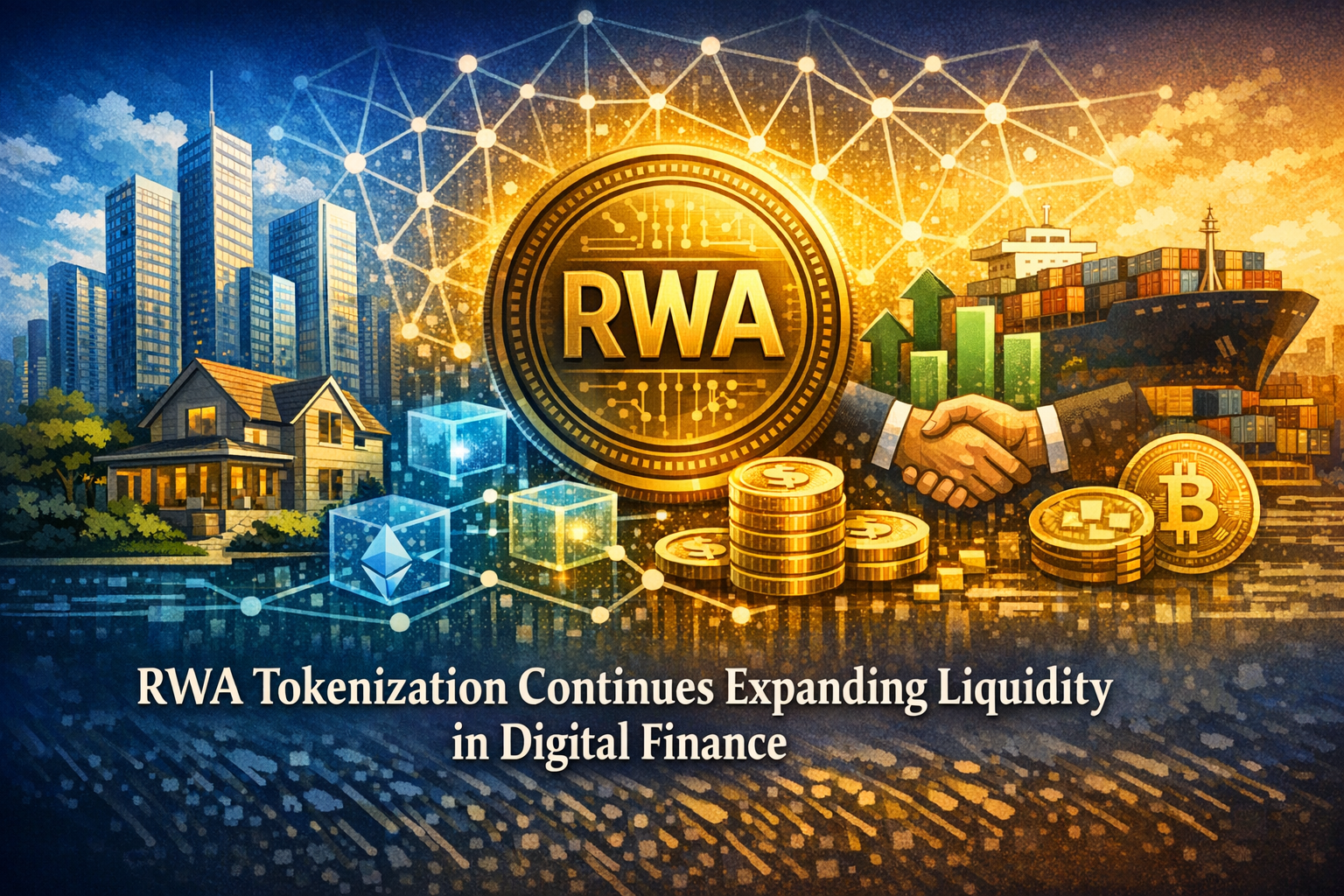
The tokenization of real-world assets (RWAs) is steadily transforming global finance by bridging traditional asset classes with blockchain-based infrastructure. Once considered a niche experiment within decentralized finance, RWA tokenization is now emerging as one of the most impactful developments in the digital asset economy. By converting physical and off-chain financial assets into on-chain tokens, this innovation is unlocking liquidity, broadening access, and reshaping how capital moves across markets.
As platforms like RWA Global highlight, tokenized real-world assets are becoming a critical connection point between legacy financial systems and the rapidly evolving blockchain ecosystem.
What Is Real-World Asset Tokenization?
Real-world asset tokenization refers to the process of representing ownership rights of physical or traditional financial assets as digital tokens on a blockchain. These assets can include real estate, private credit, commodities, bonds, invoices, intellectual property, and even infrastructure projects.
Each token represents a fractional claim on the underlying asset, allowing ownership to be divided into smaller units. This structure enables investors to gain exposure to assets that were historically illiquid, capital-intensive, or restricted to institutional participants.
By leveraging blockchain technology, tokenized assets benefit from transparency, programmability, immutability, and near-instant settlement—features that traditional financial systems often lack.
Expanding Liquidity Through Fractional Ownership
One of the most significant advantages of RWA tokenization is its ability to unlock liquidity. Assets such as real estate or private debt typically suffer from long holding periods and limited secondary markets. Tokenization changes this dynamic by enabling fractional ownership and peer-to-peer trading on digital marketplaces.
For example, a commercial property worth tens of millions of dollars can be divided into thousands of tokens, each representing a small ownership stake. Investors can buy, sell, or transfer these tokens without needing to liquidate the entire asset. This model reduces barriers to entry and increases capital efficiency for both issuers and investors.
As liquidity improves, assets that were once static can actively participate in global financial flows.
Bridging Traditional Finance and DeFi
RWA tokenization plays a pivotal role in connecting traditional finance with decentralized finance (DeFi). While DeFi has historically focused on crypto-native assets, the integration of RWAs introduces yield streams tied to real economic activity rather than purely speculative trading.
Tokenized bonds, private credit, and real estate-backed instruments can be used as collateral in DeFi protocols, expanding the scope of on-chain lending, borrowing, and yield generation. This convergence enhances stability within DeFi by anchoring value to tangible assets while offering traditional investors exposure to blockchain efficiency.
The result is a hybrid financial ecosystem where regulated assets and decentralized protocols coexist.
Increased Accessibility for Global Investors
Another transformative impact of RWA tokenization is accessibility. Investors no longer need to be accredited or geographically located near the asset to participate. Blockchain-based ownership allows global access, 24/7 trading, and lower minimum investment thresholds.
Retail investors gain exposure to asset classes that were previously reserved for institutions, while asset issuers gain access to a broader and more diverse capital base. This democratization of investment aligns with the broader ethos of digital finance—open, inclusive, and borderless markets.
Transparency, Compliance, and Trust
Modern RWA platforms increasingly emphasize regulatory compliance, identity verification, and legal clarity. Smart contracts automate compliance rules such as transfer restrictions, investor eligibility, and revenue distribution, reducing operational risk.
On-chain records also provide transparent audit trails, allowing investors to verify ownership, transaction history, and asset backing in real time. This level of transparency helps build trust, particularly in markets where opacity has traditionally been a concern.
As regulatory frameworks mature, compliant RWA tokenization is expected to gain further institutional adoption.
Challenges Still Remain
Despite its rapid growth, RWA tokenization is not without challenges. Legal enforcement across jurisdictions, asset custody, valuation accuracy, and regulatory alignment remain complex issues. Ensuring that on-chain tokens are legally enforceable claims on off-chain assets is critical for long-term credibility.
However, ongoing collaboration between blockchain platforms, regulators, and financial institutions continues to address these concerns, laying the groundwork for scalable adoption.
The Future of Tokenized Real-World Assets
Looking ahead, real-world asset tokenization is poised to become a foundational layer of digital finance. As infrastructure matures and standards emerge, tokenized assets could power everything from global trade finance to pension funds and sovereign investment vehicles.
By expanding liquidity, improving access, and enhancing transparency, RWA tokenization represents a meaningful evolution of how value is stored, transferred, and invested. Rather than replacing traditional finance, it enhances it—bringing legacy assets into a programmable, global, and efficient digital environment.
The continued expansion of RWA tokenization signals a future where real and digital economies operate seamlessly on-chain.