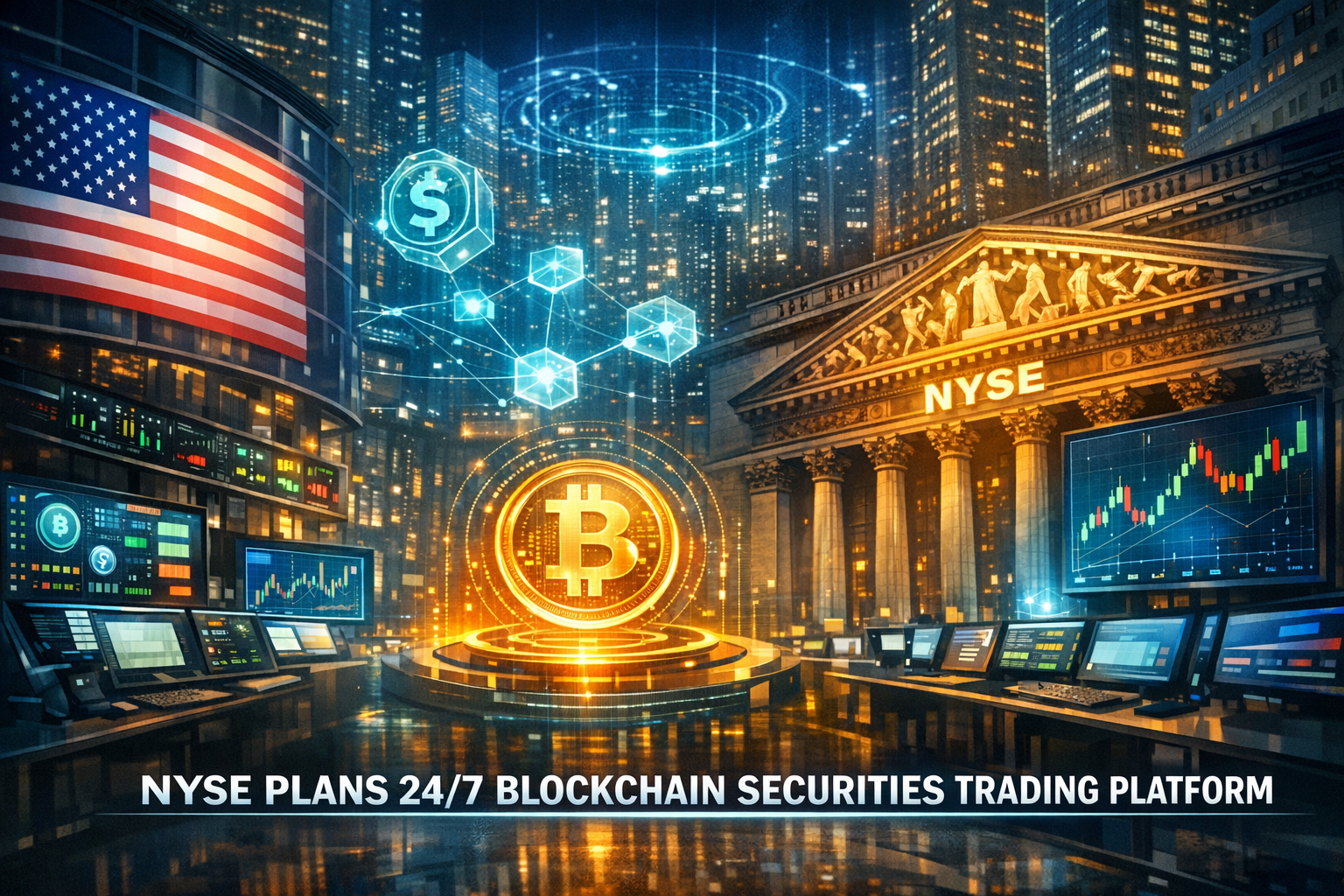
The New York Stock Exchange (NYSE), one of the most established pillars of global finance, is taking a bold step into the future by announcing plans to develop a 24/7 blockchain-powered securities trading platform. This initiative marks a significant shift in how traditional financial markets may operate in the coming years, blending the reliability of legacy institutions with the efficiency and transparency of blockchain technology.
If approved by regulators, the platform would enable round-the-clock trading of tokenized securities, supported by stablecoin-funded transactions and near-instant settlement. The move reflects growing institutional confidence in blockchain infrastructure and signals that digital assets are no longer confined to experimental or fringe financial ecosystems.
Why 24/7 Trading Matters
Traditional stock exchanges operate within strict trading hours, largely dictated by geography and historical market conventions. In contrast, digital asset markets—particularly cryptocurrencies—operate continuously, offering traders flexibility and constant liquidity.
By introducing a 24/7 trading model, NYSE aims to:
-
Eliminate time-zone limitations for global investors
-
Improve market accessibility and liquidity
-
Reduce settlement delays that can stretch into days
-
Align traditional securities markets with modern digital expectations
This shift acknowledges a new reality: capital markets are global, digital, and always on.
Tokenized Securities: Bridging TradFi and Blockchain
At the core of NYSE’s plan is tokenization—the process of representing traditional financial instruments such as equities, bonds, or funds as digital tokens on a blockchain.
Tokenized securities offer several advantages:
-
Instant or near-instant settlement, reducing counterparty risk
-
Lower operational costs through automation and smart contracts
-
Improved transparency, as transactions are recorded on immutable ledgers
-
Fractional ownership, enabling broader investor participation
For institutional investors, tokenization promises efficiency without sacrificing regulatory oversight—a critical requirement for large-scale adoption.
Stablecoins as the Settlement Layer
Another key component of the proposed platform is the use of stablecoins for funding and settlement. Stablecoins, typically pegged to fiat currencies like the US dollar, combine blockchain efficiency with price stability.
Using stablecoins could:
-
Speed up clearing and settlement cycles
-
Reduce reliance on legacy banking rails
-
Enable real-time margining and risk management
-
Support seamless cross-border transactions
This approach positions stablecoins not as speculative instruments, but as core financial infrastructure.
Regulatory Approval: The Defining Factor
Despite the technological promise, the platform’s launch timeline remains uncertain. Regulatory approval will ultimately determine when—and how—the system goes live.
Key considerations for regulators include:
-
Investor protection and custody standards
-
Market surveillance and anti-manipulation controls
-
Compliance with securities laws
-
Integration with existing clearing and settlement frameworks
The NYSE’s involvement suggests a cautious, compliant approach, likely designed to work closely with regulators rather than disrupt them.
A Signal to the Market
The announcement sends a powerful message: blockchain is no longer a parallel financial system—it is becoming part of the core. When an institution as influential as the NYSE commits to blockchain-based trading, it validates years of technological development and experimentation across the digital asset space.
This move may also accelerate:
-
Institutional adoption of tokenized assets
-
Competition among global exchanges
-
Development of regulatory frameworks for on-chain securities
-
Convergence between traditional finance and decentralized technologies
While many details remain undisclosed, one thing is clear: the NYSE’s 24/7 blockchain securities platform represents a turning point. It demonstrates that the future of finance will likely be hybrid—combining the trust, scale, and governance of traditional markets with the speed and programmability of blockchain networks.
As regulatory decisions unfold, market participants across the globe will be watching closely. If successful, this initiative could redefine how securities are issued, traded, and settled for decades to come.