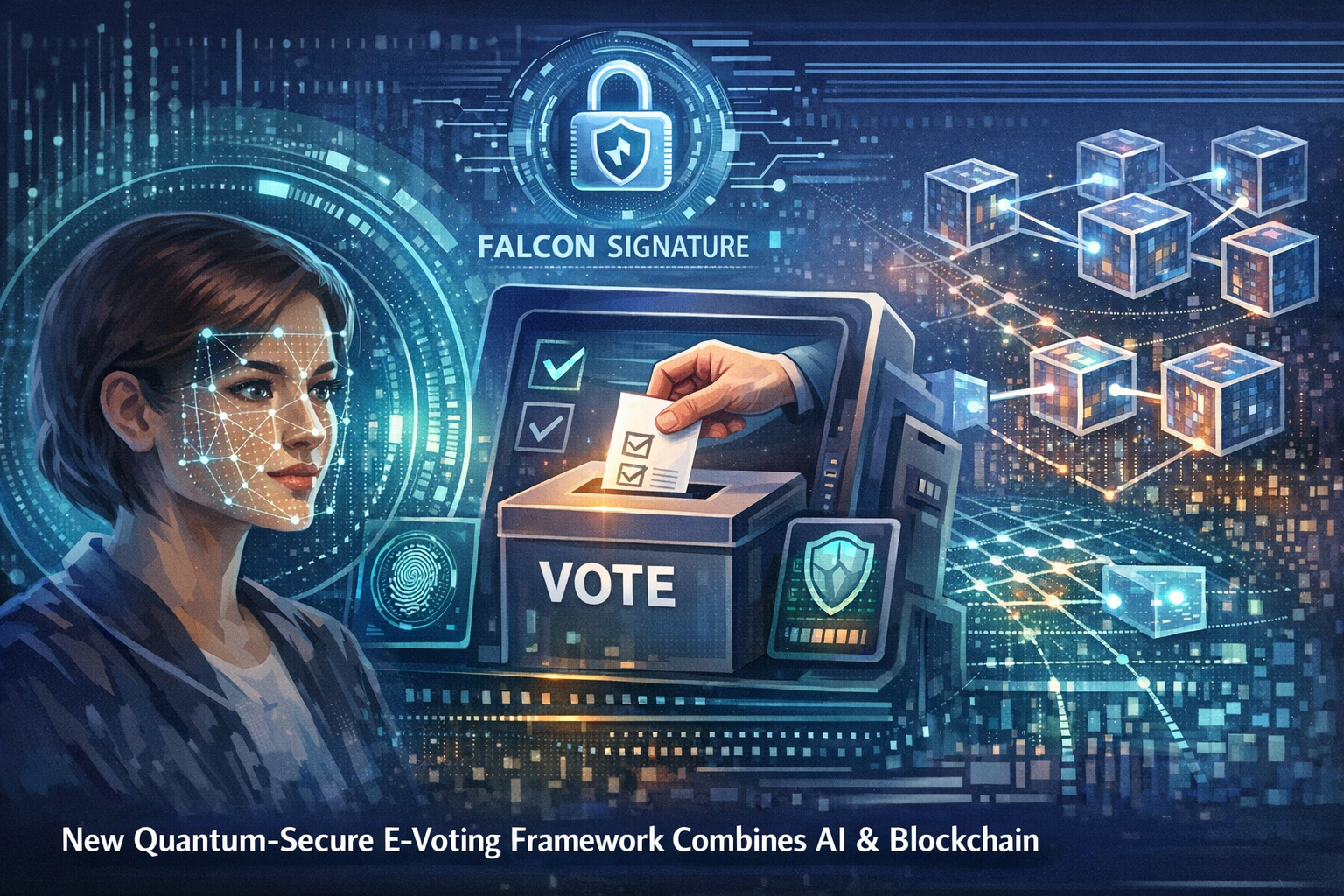
As concerns over election integrity, cyberattacks, and future quantum threats continue to grow, researchers are exploring radically new ways to secure democratic processes. A newly proposed quantum-secure electronic voting (e-voting) framework, published on arXiv, introduces a powerful combination of post-quantum cryptography, artificial intelligence–based biometric verification, and blockchain technology. Together, these components aim to create a voting system that is secure, transparent, tamper-resistant, and resilient even in a post-quantum computing era.
The Problem with Traditional E-Voting Systems
Electronic voting has long promised convenience, speed, and accessibility. However, most existing systems suffer from serious vulnerabilities:
-
Centralized databases that are attractive targets for hackers
-
Cryptographic algorithms that could be broken by future quantum computers
-
Weak identity verification mechanisms vulnerable to impersonation or fraud
-
Limited transparency, reducing public trust in election results
As quantum computing advances, widely used cryptographic standards such as RSA and ECC may become obsolete, raising alarms about the long-term security of digital elections.
Post-Quantum Security with Falcon Signatures
At the heart of the new framework is Falcon, a lattice-based digital signature scheme recognized for its post-quantum resistance. Falcon is designed to remain secure even against attackers equipped with powerful quantum computers capable of running Shor’s algorithm.
In the proposed system, Falcon signatures are used to authenticate votes and verify their integrity. Each ballot is cryptographically signed, ensuring that:
-
Votes cannot be altered once cast
-
Ballots are verifiable without revealing voter identity
-
The system remains secure against future cryptographic breakthroughs
This approach future-proofs election infrastructure against the coming quantum era.
AI-Powered Biometric Verification
To address identity fraud and unauthorized voting, the framework integrates AI-driven biometric authentication, specifically facial recognition. Before a vote is cast, the system verifies the voter’s identity using trained AI models capable of detecting spoofing attempts, deepfakes, or replay attacks.
This biometric layer ensures:
-
Only eligible voters can participate
-
Each individual can vote only once
-
The voting process remains fast and user-friendly
Importantly, biometric data is not stored on-chain. Instead, privacy-preserving techniques are used to confirm identity without exposing sensitive personal information.
Blockchain for Transparency and Immutability
Once authenticated and signed, votes are recorded on a blockchain ledger. Blockchain technology provides the transparency and immutability needed to build trust in digital elections.
Key benefits include:
-
An immutable record of all votes cast
-
Public verifiability without compromising voter anonymity
-
Elimination of single points of failure
-
Resistance to tampering or post-election manipulation
Election observers, auditors, and even citizens can independently verify results, dramatically increasing confidence in the process.
Privacy, Anonymity, and Trust
One of the most impressive aspects of the framework is its careful balance between security and privacy. While voter identity is verified using AI, the vote itself remains anonymous once recorded on the blockchain. Cryptographic separation ensures no link can be made between a voter and their ballot.
This design aligns with democratic principles while leveraging cutting-edge technology to prevent fraud, coercion, and interference.
Challenges and Real-World Adoption
Despite its promise, the framework faces real-world challenges before widespread deployment:
-
Scalability of blockchain networks during national elections
-
Ethical and legal concerns surrounding biometric data
-
Accessibility for populations without advanced digital infrastructure
-
Regulatory approval and public acceptance
However, the researchers argue that with proper governance, transparent algorithms, and open auditing, these challenges can be addressed.
A Glimpse into the Future of Democracy
This quantum-secure e-voting framework represents a bold step toward next-generation digital democracy. By combining post-quantum cryptography, AI-based identity verification, and blockchain transparency, the system tackles many of the long-standing weaknesses of electronic voting.
As governments worldwide explore digital transformation, such frameworks could eventually form the foundation of secure, trustworthy, and future-proof elections — resistant not only to today’s cyber threats but also to the unknown challenges of tomorrow’s quantum-powered world.
If implemented responsibly, this convergence of AI, blockchain, and quantum security may redefine how societies safeguard one of their most fundamental rights: the vote.