
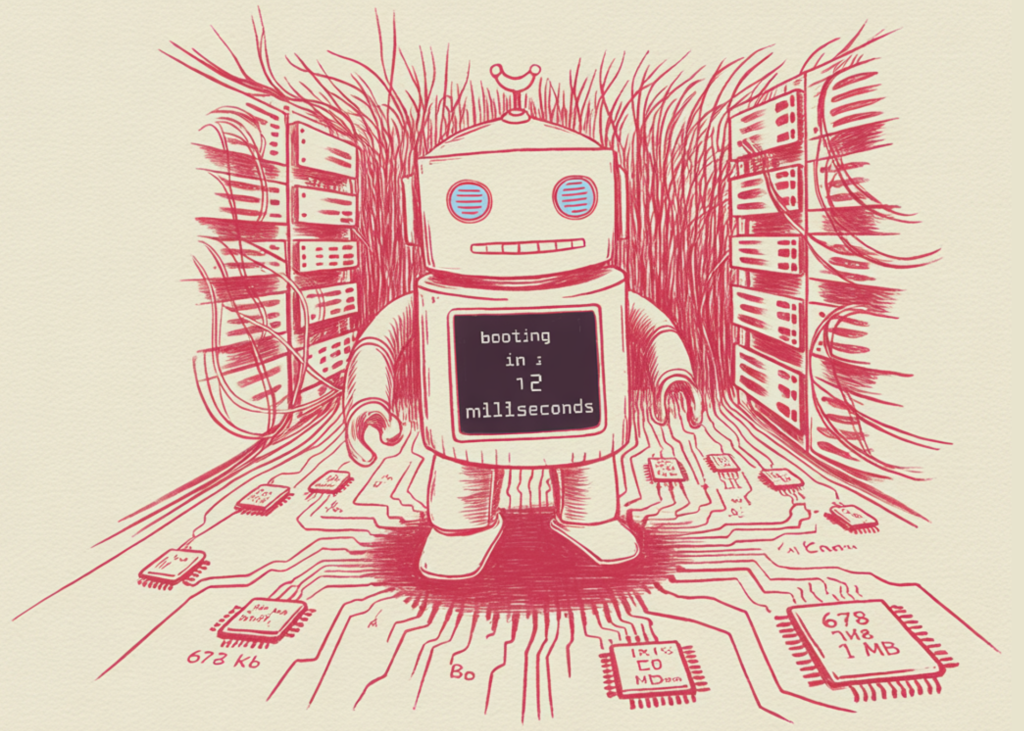
In the current AI landscape, agentic frameworks typically rely on high-level managed languages like Python or Go. While these ecosystems offer extensive libraries, they introduce significant overhead through runtimes, virtual machines, and garbage collectors. NullClaw is a project that diverges from this trend, implementing a full-stack AI agent framework entirely in Raw Zig.
By eliminating the runtime layer, NullClaw achieves a compiled binary size of 678 KB and operates with approximately 1 MB of RAM. For devs working in resource-constrained environments or edge computing, these metrics represent a shift in how AI orchestration can be deployed.
Performance Benchmarks and Resource Allocation
The primary distinction between NullClaw and existing frameworks lies in its resource footprint. Standard agent implementations often require significant hardware overhead to maintain the underlying language environment:
Local machine benchmark (macOS arm64, Feb 2026), normalized for 0.8 GHz edge hardware.
| OpenClaw | NanoBot | PicoClaw | ZeroClaw |  NullClaw NullClaw |
|
|---|---|---|---|---|---|
| Language | TypeScript | Python | Go | Rust | Zig |
| RAM | > 1 GB | > 100 MB | < 10 MB | < 5 MB | ~1 MB |
| Startup (0.8 GHz) | > 500 s | > 30 s | < 1 s | < 10 ms | < 8 ms |
| Binary Size | ~28 MB (dist) | N/A (Scripts) | ~8 MB | 3.4 MB | 678 KB |
| Tests | — | — | — | 1,017 | 3,230+ |
| Source Files | ~400+ | — | — | ~120 | ~110 |
| Cost | Mac Mini $599 | Linux SBC ~$50 | Linux Board $10 | Any $10 hardware | Any $5 hardware |
NullClaw’s ability to boot in under 2 milliseconds is a direct result of its lack of a virtual machine or interpreter. It compiles directly to machine code with zero dependencies beyond libc, ensuring that CPU cycles are dedicated entirely to logic rather than runtime management.
Architectural Design: The Vtable Interface Pattern
The most critical aspect of NullClaw is its modularity. Despite its small size, the system is not hard-coded for specific vendors. Every major subsystem—including providers, channels, tools, and memory backends—is implemented as a vtable interface.
A vtable (virtual method table) allows for dynamic dispatch at runtime. In NullClaw, this enables users to swap components via configuration changes without modifying or recompiling the source code. This architecture supports:
- 22+ AI Providers: Integration for OpenAI, Anthropic, Ollama, DeepSeek, Groq, and others.
- 13 Communication Channels: Native support for Telegram, Discord, Slack, WhatsApp, iMessage, and IRC.
- 18+ Built-in Tools: Executable functions for agentic task completion.
This modularity ensures that the core engine remains lightweight while remaining extensible for complex ‘subagent’ workflows and MCP (Model Context Protocol) integration.
Memory Management and Security
NullClaw manages memory manually, a core feature of the Zig programming language. To maintain a 1 MB RAM footprint while handling complex data, it utilizes a hybrid vector + keyword memory search. This allows the agent to perform retrieval-augmented generation (RAG) tasks without the overhead of an external, heavy vector database.
Security is integrated into the low-level design rather than added as an external layer:
- Encryption: API keys are encrypted by default using ChaCha20-Poly1305, an AEAD (Authenticated Encryption with Associated Data) algorithm known for high performance on mobile and embedded CPUs.
- Execution Sandboxing: When agents utilize tools or execute code, NullClaw supports multi-layer sandboxing through Landlock (a Linux security module), Firejail, and Docker.
Hardware Peripheral Support
Because NullClaw is written in Zig and lacks a heavy runtime, it is uniquely suited for hardware interaction. It provides native support for hardware peripherals across various platforms, including Arduino, Raspberry Pi, and STM32. This enables the deployment of autonomous AI agents directly onto microcontrollers, allowing them to interact with physical sensors and actuators in real-time.
Engineering Reliability
A common concern with manual memory management and low-level implementations is system stability. NullClaw addresses this through rigorous validation:
- Test Suite: The codebase includes 2,738 tests to ensure logic consistency and memory safety.
- Codebase Volume: The framework comprises approximately 45,000 lines of Zig.
- Licensing: It is released under the MIT License, allowing for broad commercial and private utility.
Key Takeaways
- Extreme Resource Efficiency: By using raw Zig and eliminating runtimes (No Python, No JVM, No Go), NullClaw reduces RAM requirements to ~1 MB and binary size to 678 KB. This is a 99% reduction in resources compared to standard managed-language agents.
- Near-Instant Cold Starts: The removal of a virtual machine or interpreter allows the system to boot in under 2 milliseconds. This makes it ideal for event-driven architectures or serverless functions where latency is critical.
- Modular ‘Vtable’ Architecture: Every subsystem (AI providers, chat channels, memory backends) is a vtable interface. This allows developers to swap providers like OpenAI for local DeepSeek or Groq via simple config changes with zero code modifications.
- Embedded and IoT Ready: Unlike traditional frameworks requiring a PC or expensive Mac Mini, NullClaw provides native support for Arduino, Raspberry Pi, and STM32. It allows a full agent stack to run on a $5 board.
- Security-First Design: Despite its small footprint, it includes high-level security features: default ChaCha20-Poly1305 encryption for API keys and multi-layer sandboxing using Landlock, Firejail, and Docker to contain agent-executed code.
Check out the Repo. Also, feel free to follow us on Twitter and don’t forget to join our 120k+ ML SubReddit and Subscribe to our Newsletter. Wait! are you on telegram? now you can join us on telegram as well.
The post Meet NullClaw: The 678 KB Zig AI Agent Framework Running on 1 MB RAM and Booting in Two Milliseconds appeared first on MarkTechPost.