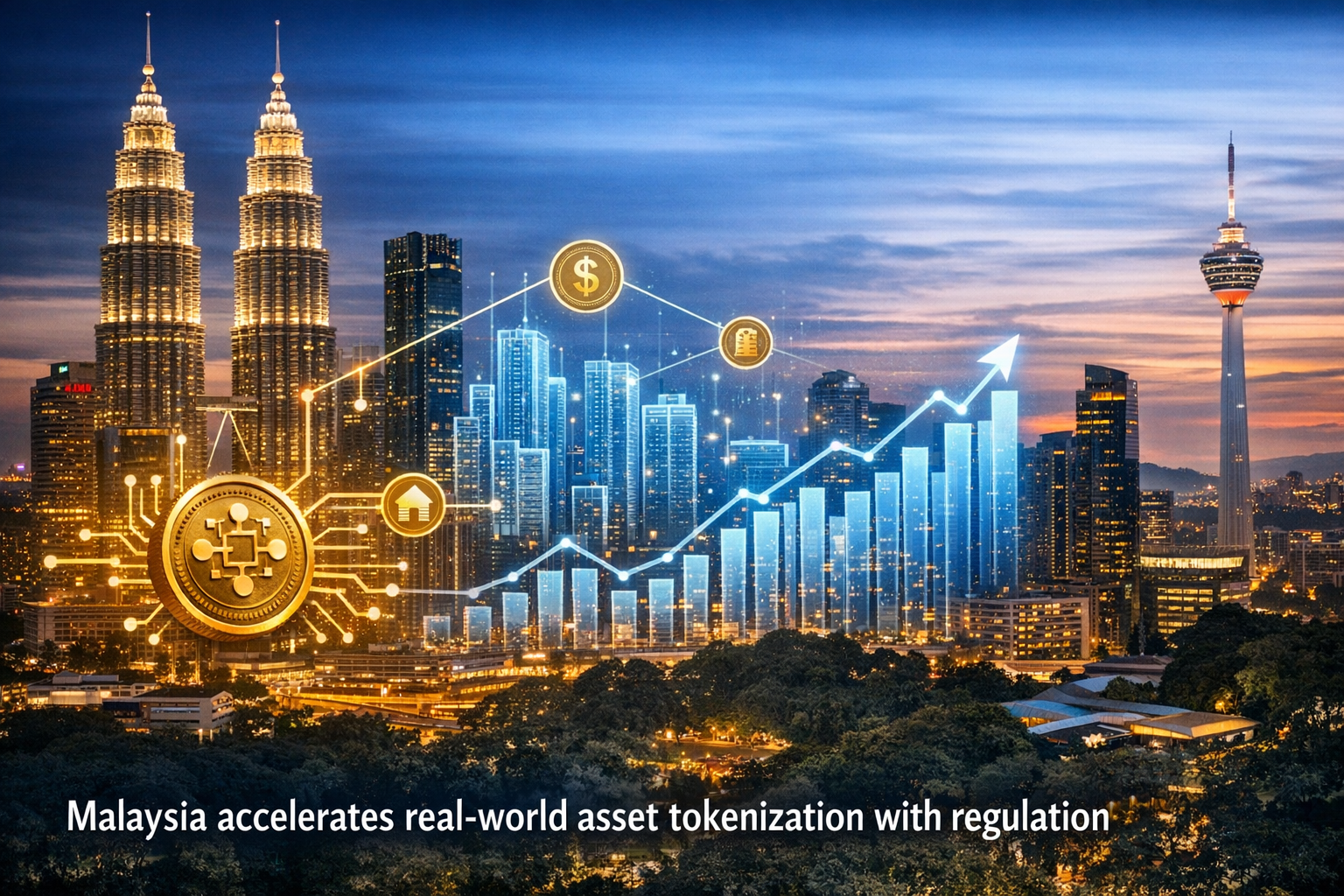
Malaysia is rapidly positioning itself as one of Southeast Asia’s most forward-thinking financial hubs by accelerating the adoption of real-world asset (RWA) tokenization. With a clear regulatory roadmap and growing collaboration between regulators, financial institutions, and technology providers, the country is laying the groundwork for a tokenized economy that could significantly reshape capital markets by 2030.
A Strategic Regulatory Approach
Unlike many jurisdictions that have taken a cautious or fragmented stance toward blockchain-based finance, Malaysia has opted for a structured and pragmatic approach. Regulators are focusing on clarity rather than restriction, providing well-defined guidelines that allow innovation to progress within a compliant framework. This regulatory certainty is proving critical in attracting both domestic and international players looking to tokenize assets such as real estate, commodities, sukuk, and private market instruments.
By addressing legal ownership, custody, investor protection, and compliance early, Malaysia is reducing one of the biggest barriers to RWA adoption: uncertainty. This proactive stance sends a strong signal to the market that tokenization is not a speculative trend, but a long-term pillar of the country’s financial strategy.
Why Real-World Assets Matter
Real-world asset tokenization refers to the process of representing physical or traditional financial assets on blockchain networks. These tokenized assets can be traded, settled, and managed more efficiently than their traditional counterparts. For Malaysia, the implications are significant.
Tokenization enables fractional ownership, allowing smaller investors to access assets that were previously reserved for institutions or high-net-worth individuals. It also improves liquidity in traditionally illiquid markets, reduces settlement times, and increases transparency across the asset lifecycle. For emerging markets and fast-growing economies, these advantages can unlock capital and accelerate economic participation.
Institutional Adoption Gains Momentum
Malaysia’s financial ecosystem is not moving alone. Banks, asset managers, fintech startups, and infrastructure providers are increasingly collaborating to build tokenization platforms that align with regulatory expectations. Institutional-grade custody solutions, compliant marketplaces, and interoperable blockchain infrastructure are becoming central to these efforts.
This institutional engagement is crucial. It bridges the gap between traditional finance and decentralized technologies, ensuring that tokenized RWAs can scale beyond pilot projects and into mainstream financial products. As trust grows, so does the likelihood of broader adoption across pension funds, insurance firms, and cross-border investors.
Targeting Long-Term Growth Toward 2030
Malaysia’s ambitions extend well beyond short-term innovation. Policymakers and industry leaders are aligning tokenization initiatives with national economic goals, including digital transformation, sustainable finance, and regional competitiveness. By 2030, tokenized RWAs are expected to represent a meaningful share of capital market activity, supporting everything from infrastructure financing to ESG-focused investments.
This long-term vision gives market participants confidence to invest in infrastructure, talent, and product development today. It also positions Malaysia as a potential regional gateway for tokenized assets, connecting Southeast Asian markets with global blockchain-based capital flows.
A Model for Emerging Financial Hubs
Malaysia’s approach highlights an important lesson for other emerging financial centers: regulation and innovation do not need to be at odds. With clear rules, open dialogue, and strategic intent, blockchain-based finance can evolve responsibly while still delivering transformative benefits.
As real-world asset tokenization continues to gain global traction, Malaysia’s regulatory-led acceleration may well become a reference model for how nations can embrace the future of finance without sacrificing stability or trust.