The tokenization of real-world assets is rapidly moving from concept to execution, and real estate stands at the forefront of this transformation. Libertum, a blockchain-based tokenization platform, is continuing to expand its infrastructure to support compliant, scalable, and sustainable real estate investments through on-chain equity, fractional ownership, and NFT-based ownership layers.
As traditional property markets struggle with liquidity constraints, high entry barriers, and slow settlement processes, Libertum’s approach represents a meaningful step toward modernizing how real estate is owned, financed, and traded.
Building the Infrastructure for On-Chain Real Estate
Libertum’s core focus is not merely token issuance, but the creation of a full-stack tokenization infrastructure that aligns with regulatory requirements while remaining accessible to global investors. The platform enables the issuance of equity and real estate-backed tokens that represent legally compliant ownership claims, bridging the gap between traditional property law and blockchain-based finance.
By emphasizing compliance from the ground up, Libertum positions itself as a serious player in institutional-grade tokenization. This is especially critical as regulators increasingly scrutinize tokenized securities and real estate products. Rather than operating in regulatory gray zones, Libertum integrates compliance frameworks directly into its token design and issuance processes.
NFT-Based Ownership Layers: A New Model for Property Rights
One of Libertum’s most notable innovations is its use of NFT-based ownership layers. Unlike speculative NFTs, these tokens function as programmable ownership representations tied to real-world assets. Each NFT can encode ownership rights, profit-sharing logic, and transfer conditions, creating a transparent and auditable structure for property ownership.
This approach allows real estate assets to be broken down into digitally native ownership units without losing legal clarity. Investors can verify their rights on-chain while maintaining alignment with off-chain legal agreements. In practice, this creates a hybrid ownership model where blockchain technology enhances, rather than replaces, established property frameworks.
Fractional Real Estate Investing on the Blockchain
Fractionalization is one of the most powerful use cases of tokenization, and Libertum places it at the center of its real estate strategy. Through on-chain fractional ownership, investors can gain exposure to high-quality real estate assets with significantly lower capital requirements.
This model democratizes access to property markets that were previously reserved for institutional investors or high-net-worth individuals. At the same time, fractional tokens improve liquidity by enabling secondary trading, potentially transforming traditionally illiquid assets into dynamic financial instruments.
For property owners and developers, fractional tokenization opens new funding channels. Capital can be raised more efficiently, investor bases can be diversified globally, and ownership structures become more flexible without sacrificing transparency.
Sustainability Meets Tokenization
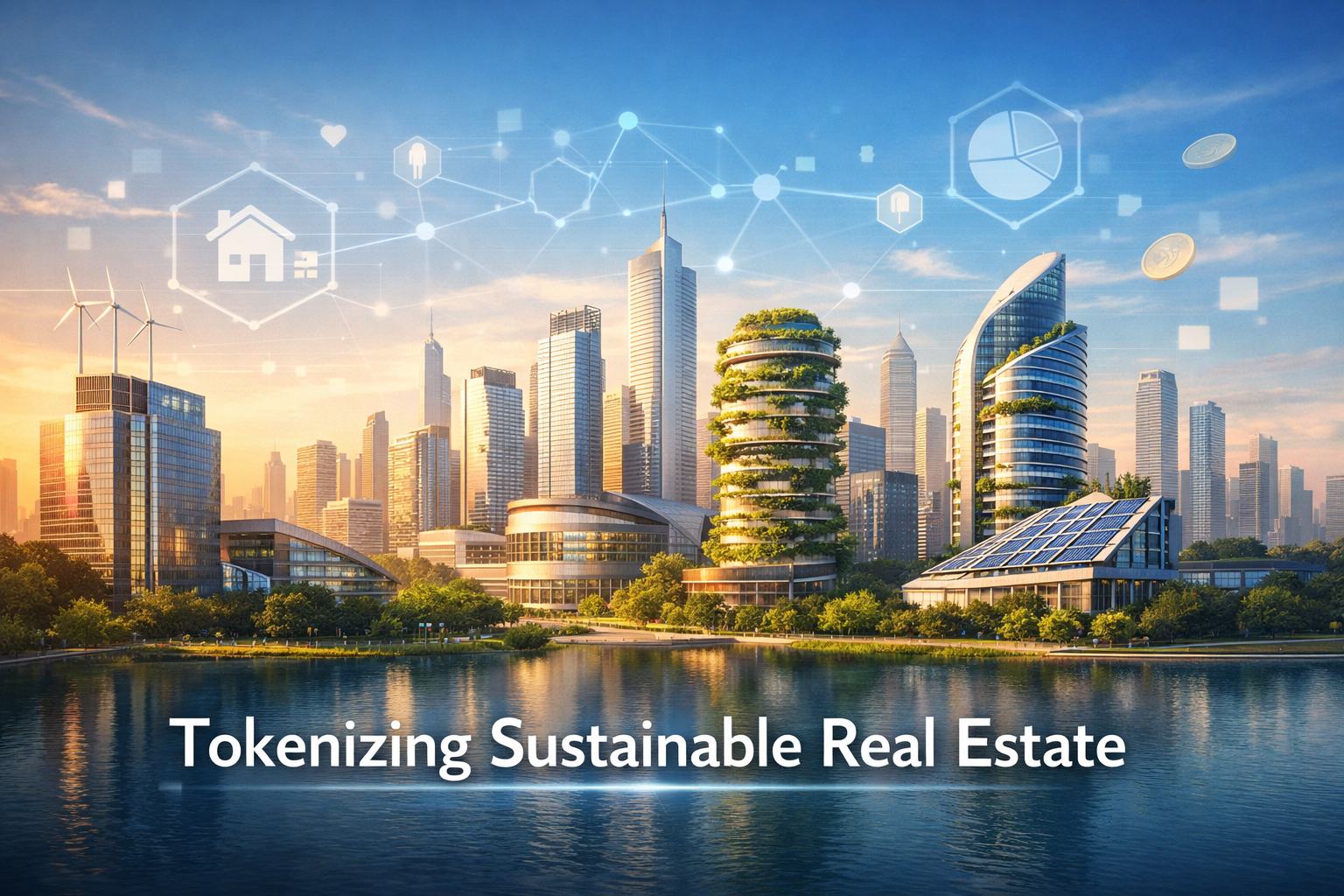
Libertum’s expansion is closely tied to sustainable real estate initiatives. By enabling transparent, on-chain tracking of ownership and financial flows, tokenization can support ESG-aligned projects and environmentally conscious developments. Investors increasingly demand visibility into how capital is deployed, and blockchain-based infrastructure provides an immutable record of asset performance and governance.
Sustainable real estate tokenization also aligns with broader trends in digital finance, where impact-driven investing and programmable finance converge. Libertum’s infrastructure supports this shift by making sustainability-compatible assets easier to structure, distribute, and manage on-chain.
A Step Toward the Future of Property Markets
As tokenization continues to mature, platforms like Libertum are laying the groundwork for a new real estate paradigm—one defined by accessibility, liquidity, and transparency. By combining compliant equity tokens, NFT-based ownership layers, and fractional investment models, Libertum is helping transform real estate from a static asset class into a digitally native component of the global financial system.
The expansion of Libertum’s tokenization infrastructure signals that real-world asset tokenization is no longer experimental. It is becoming a foundational layer of next-generation finance, with sustainable real estate emerging as one of its most compelling applications.