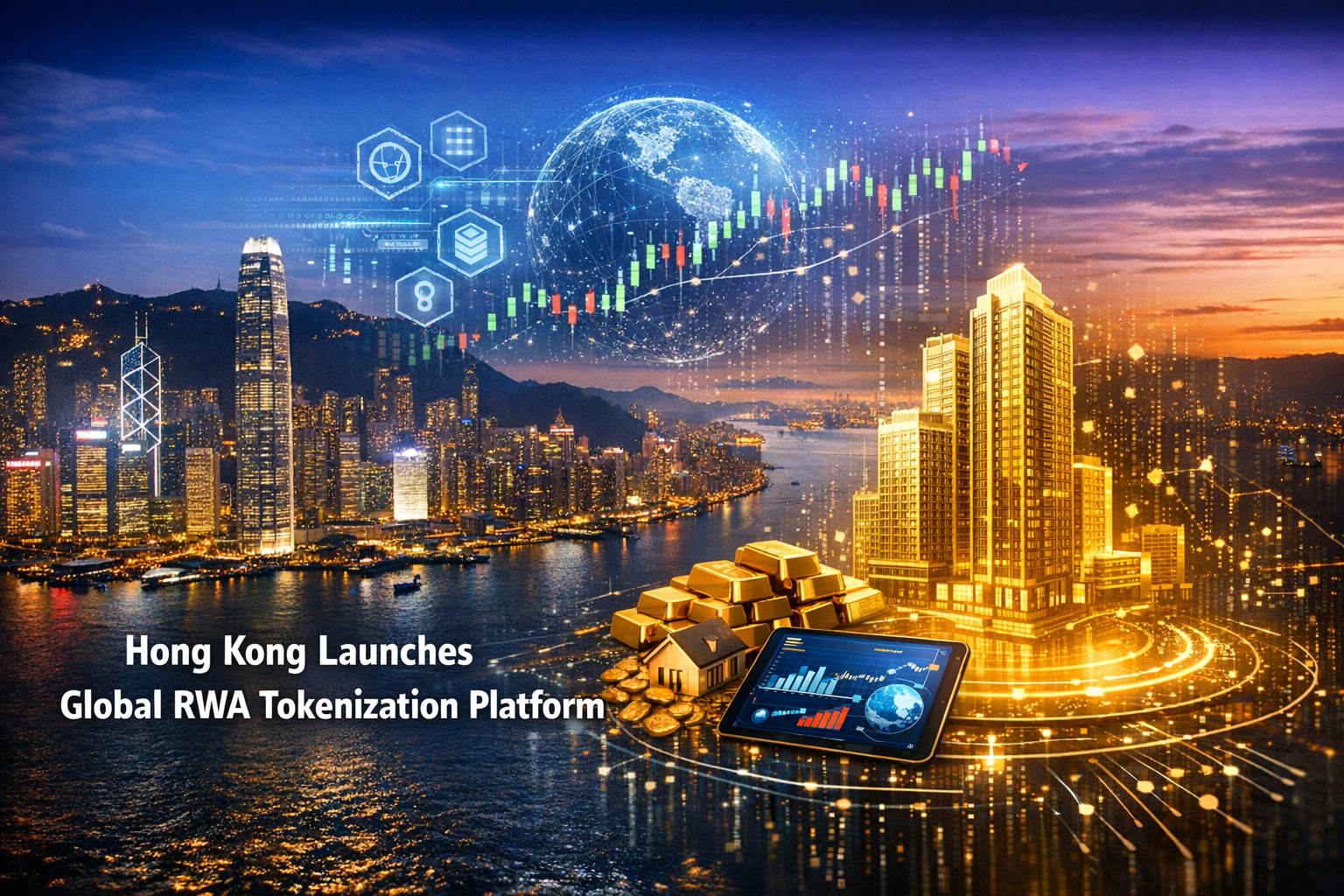
Hong Kong has taken a decisive step toward shaping the future of global digital finance with the launch of a new real-world assets (RWA) tokenization registry platform. Designed to bridge traditional finance and Web3 infrastructure, the platform enables the tokenization of tangible assets such as real estate, commodities, and other physical assets using standardized blockchain frameworks. This move reinforces Hong Kong’s ambition to become a leading global hub for regulated digital assets and institutional-grade blockchain innovation.
Bridging Traditional Assets and Web3 Standards
At its core, the new RWA registry platform introduces a unified and transparent framework for registering, issuing, and managing tokenized real-world assets. By leveraging Web3 standards, the system ensures interoperability, verifiable ownership, and on-chain traceability—key requirements for both institutional investors and regulators.
Unlike earlier tokenization experiments that often operated in fragmented or lightly regulated environments, Hong Kong’s approach emphasizes compliance-first architecture. Asset data, ownership rights, and transaction histories are designed to be verifiable and auditable, reducing counterparty risk while increasing trust across the ecosystem. This is particularly critical for assets such as real estate and commodities, where legal clarity and enforceability are essential.
Unlocking Liquidity in Traditionally Illiquid Markets
One of the most compelling advantages of RWA tokenization is liquidity creation. Assets like commercial real estate, infrastructure projects, or physical commodities have historically been difficult to trade due to high entry barriers, large ticket sizes, and slow settlement processes. Tokenization enables fractional ownership, allowing investors to gain exposure with significantly lower capital requirements.
By integrating these assets into a blockchain-based registry, Hong Kong’s platform aims to unlock secondary market liquidity, shorten settlement times, and reduce operational friction. For asset owners, this means access to a broader pool of global investors. For investors, it offers diversified exposure to traditionally inaccessible asset classes—now available in digital form.
Institutional Adoption Takes Center Stage
A defining feature of Hong Kong’s RWA initiative is its clear focus on institutional adoption. The platform is positioned to support banks, asset managers, family offices, and regulated investment funds looking to tokenize and manage real-world assets within a compliant environment.
Institutional investors have long expressed interest in tokenization but remained cautious due to regulatory uncertainty and infrastructure limitations. By providing a government-backed, standards-driven registry, Hong Kong significantly lowers the barriers to entry. This could accelerate the adoption of tokenized investment funds, structured products, and even tokenized debt instruments tied to real assets.
Transparency, Trust, and Global Connectivity
Transparency is another cornerstone of the new platform. Blockchain-based registries allow stakeholders to independently verify asset data, ownership structures, and transaction flows in near real time. This level of transparency not only enhances trust but also supports stronger ESG reporting and compliance monitoring—an increasingly important factor for global investors.
Moreover, by aligning with international Web3 standards, the platform is designed for cross-border compatibility. This opens the door for global capital flows into tokenized assets registered in Hong Kong, positioning the city as a gateway between traditional financial markets and the emerging digital asset economy.
Strategic Implications for the Global RWA Market
Hong Kong’s launch comes at a time when the global RWA sector is rapidly evolving. Tokenization is moving beyond pilot projects into real-world deployment, with growing interest in tokenized real estate, commodities, carbon credits, and private credit markets. By establishing a robust registry infrastructure early, Hong Kong gains a strategic advantage in setting best practices and attracting high-quality issuers.
This initiative also signals a broader shift in how financial centers view blockchain technology—not as a speculative tool, but as foundational infrastructure for the next generation of financial markets. As other jurisdictions watch closely, Hong Kong’s model could become a blueprint for regulated RWA tokenization worldwide.
Looking Ahead
The launch of Hong Kong’s global RWA tokenization platform marks a pivotal moment for digital finance. By combining regulatory clarity, institutional-grade infrastructure, and Web3 interoperability, the city is positioning itself at the forefront of the tokenized asset revolution.
As adoption grows, the platform has the potential to reshape capital markets, redefine asset ownership, and accelerate the convergence of traditional finance and blockchain technology. For investors, issuers, and innovators alike, Hong Kong’s move represents not just a local development—but a global milestone in the evolution of real-world asset tokenization.