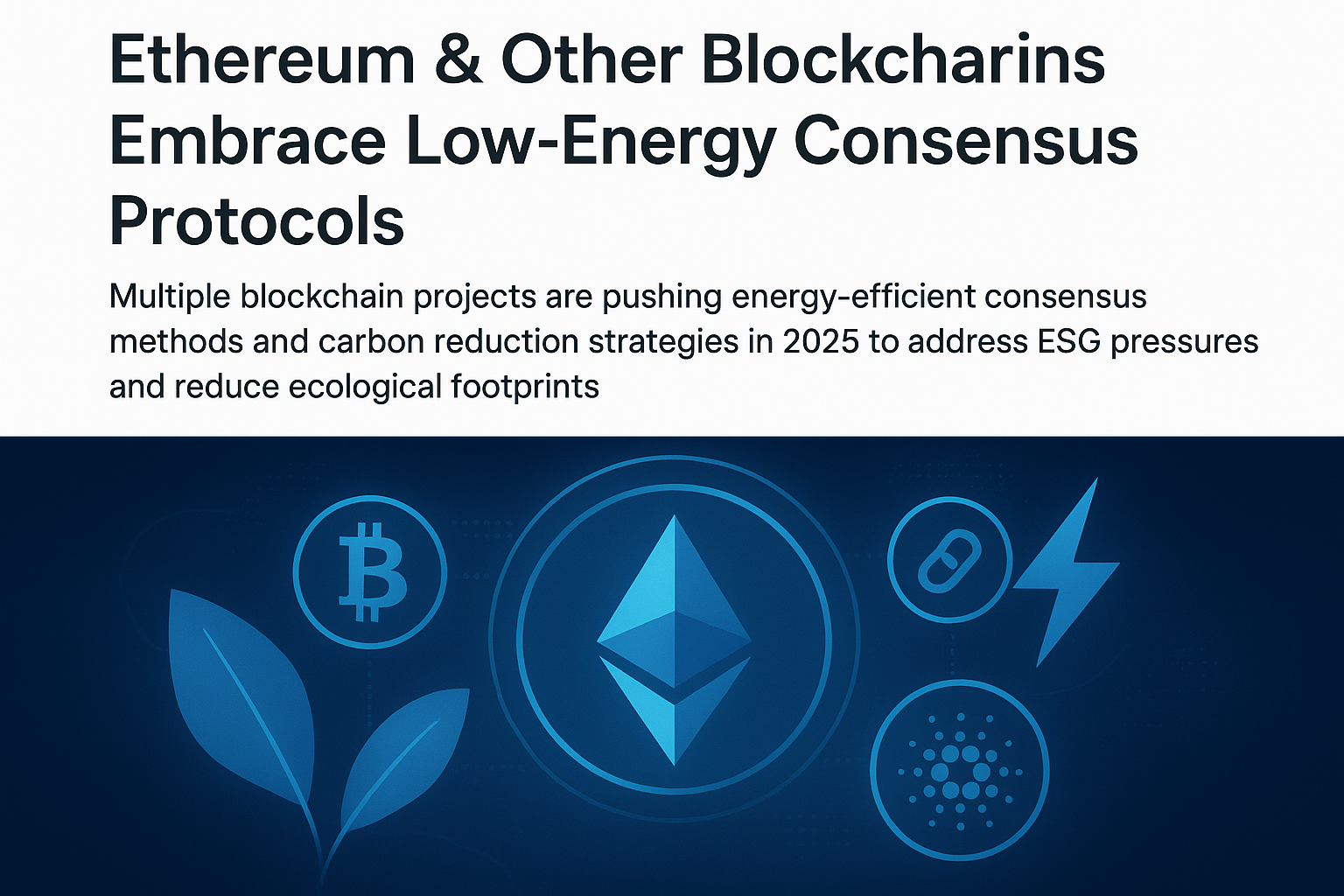

The cryptocurrency industry is undergoing a profound transformation in 2026. Once criticized for its massive energy consumption and environmental impact, the sector is now witnessing the rapid rise of green, energy-efficient blockchain projects. As global awareness around climate change intensifies and investors increasingly prioritize sustainability, eco-friendly cryptocurrencies are emerging as the future of digital finance.
This shift is not just a temporary trend—it represents a structural evolution in how blockchain technology is designed, deployed, and valued.
The Environmental Problem with Traditional Cryptocurrencies
To understand the importance of green crypto projects, it’s essential to recognize the environmental challenges posed by early blockchain networks. Traditional cryptocurrencies like Bitcoin rely on Proof-of-Work (PoW) consensus mechanisms, which require enormous computational power to validate transactions.
This process involves thousands of high-performance mining machines competing simultaneously to solve complex mathematical puzzles. The result is an immense energy demand—comparable in some cases to the electricity consumption of entire countries.
While PoW provides strong security, its environmental cost has become increasingly difficult to justify in a world focused on reducing carbon emissions.
As a result, investors, regulators, and developers have begun searching for more sustainable alternatives.
The Rise of Energy-Efficient Consensus Mechanisms
Green crypto projects use advanced consensus mechanisms designed to drastically reduce energy consumption while maintaining security and decentralization.
The most important of these include:
Proof-of-Stake (PoS)
Proof-of-Authority (PoA)
Directed Acyclic Graph (DAG) systems
Hashgraph consensus
Hybrid consensus models
Unlike Proof-of-Work, these systems do not rely on energy-intensive mining. Instead, validators are selected based on token ownership, reputation, or network participation.
This dramatically lowers power requirements—often by over 99%.
Leading Green Crypto Projects Driving the Movement
Several blockchain platforms are leading the sustainability revolution, attracting investors, developers, and institutions seeking environmentally responsible alternatives.
Cardano: Scientific Design Meets Sustainability
Developed with a research-driven approach, the blockchain supported by the Cardano Foundation uses a Proof-of-Stake mechanism called Ouroboros. This system allows the network to operate securely while consuming only a fraction of the energy required by traditional mining-based networks.
Cardano’s architecture emphasizes:
Energy efficiency
Academic peer review
Long-term scalability
Sustainable network growth
Its low environmental footprint has made it particularly attractive to institutions and governments seeking green blockchain solutions.
Algorand: Carbon-Negative Blockchain Innovation
The blockchain ecosystem supported by the Algorand Foundation has positioned itself as one of the most environmentally friendly networks in existence.
Algorand uses a Pure Proof-of-Stake model, which eliminates mining entirely and ensures minimal energy consumption. More importantly, Algorand has gone beyond neutrality—it has achieved carbon-negative status by offsetting its already small emissions.
Key advantages include:
Extremely low transaction energy cost
Instant transaction finality
High scalability
Carbon-negative certification
This makes Algorand particularly appealing to ESG-focused investors and sustainable technology initiatives.
Hedera: Enterprise-Grade Efficiency with Hashgraph Technology
The distributed ledger platform governed by the Hedera Hashgraph represents another major leap forward in green blockchain infrastructure.
Instead of using traditional blockchain architecture, Hedera utilizes Hashgraph consensus, which enables fast, secure, and energy-efficient transactions.
Hedera’s energy efficiency is exceptional—each transaction consumes only a tiny fraction of the energy required by older blockchain networks.
Its governing council includes major global enterprises, reinforcing confidence in its long-term sustainability and adoption potential.
Why Investors Are Moving Toward Green Crypto
Several key factors are driving investor interest in sustainable blockchain projects.
1. ESG Investing Is Becoming the Global Standard
Environmental, Social, and Governance (ESG) investing is no longer a niche concept. Major institutions now consider sustainability a core requirement before allocating capital.
Green crypto projects align perfectly with these standards.
Institutional investors prefer assets that:
Minimize environmental harm
Demonstrate long-term viability
Comply with emerging regulations
Maintain strong public perception
Energy-efficient blockchain networks meet all these criteria.
2. Regulatory Pressure Is Increasing
Governments worldwide are introducing stricter environmental regulations, including scrutiny of energy-intensive mining operations.
Some jurisdictions have already imposed:
Mining restrictions
Carbon taxes
Environmental compliance requirements
Green crypto networks avoid these risks entirely, positioning themselves as regulatory-friendly alternatives.
This reduces uncertainty and increases investor confidence.
3. Lower Operating Costs Improve Long-Term Viability
Energy-efficient networks are also more economically sustainable.
Lower energy consumption leads to:
Reduced operating costs
Lower transaction fees
Greater scalability
Improved network stability
This creates stronger long-term economic models compared to energy-intensive systems.
4. Institutional Adoption Is Accelerating
Large corporations, financial institutions, and governments are exploring blockchain technology—but they require environmentally responsible solutions.
Green crypto projects offer:
Sustainable infrastructure
Enterprise-level performance
Regulatory compatibility
Lower operational risk
This makes them ideal for large-scale adoption.
The Technology Advantage: Efficiency Without Compromise
One of the most important developments in green crypto is that sustainability no longer comes at the cost of performance.
Modern eco-friendly networks offer:
High transaction speeds
Near-instant finality
Low transaction costs
Strong security
Massive scalability
This eliminates the traditional trade-off between efficiency and performance.
In many cases, green blockchain platforms outperform older networks.
Public Perception Is Changing
Cryptocurrency’s environmental reputation has historically been controversial. However, green crypto projects are helping reshape the narrative.
Instead of being seen as environmentally harmful, blockchain technology is increasingly viewed as a tool for sustainability innovation.
Green blockchain applications now support:
Renewable energy tracking
Carbon credit markets
Sustainable supply chains
Environmental monitoring
Green finance platforms
This expands blockchain’s role beyond finance into global sustainability solutions.
The Competitive Advantage of Early Adoption
As sustainability becomes a defining factor in technology adoption, green crypto projects are gaining a competitive advantage.
Early adopters benefit from:
Stronger investor demand
Institutional partnerships
Regulatory alignment
Long-term growth potential
This momentum is expected to accelerate throughout 2026 and beyond.
The Future of Sustainable Blockchain
The shift toward green crypto is not just a temporary trend—it represents the future of blockchain technology.
Several key developments are likely:
Increased institutional investment in eco-friendly networks
Continued migration away from energy-intensive systems
Expansion of carbon-neutral and carbon-negative blockchain projects
Greater integration with global sustainability initiatives
Green crypto projects are positioning themselves at the center of this evolution.
The rise of green crypto projects marks one of the most important turning points in the history of blockchain technology. Energy-efficient platforms like those supported by the Cardano Foundation, Algorand Foundation, and Hedera Hashgraph demonstrate that blockchain can be both powerful and environmentally responsible.
As sustainability becomes a global priority, investors, institutions, and developers are increasingly aligning with eco-friendly blockchain solutions.
In 2026, green crypto is no longer an alternative—it is rapidly becoming the standard.
The future of cryptocurrency is not just decentralized.