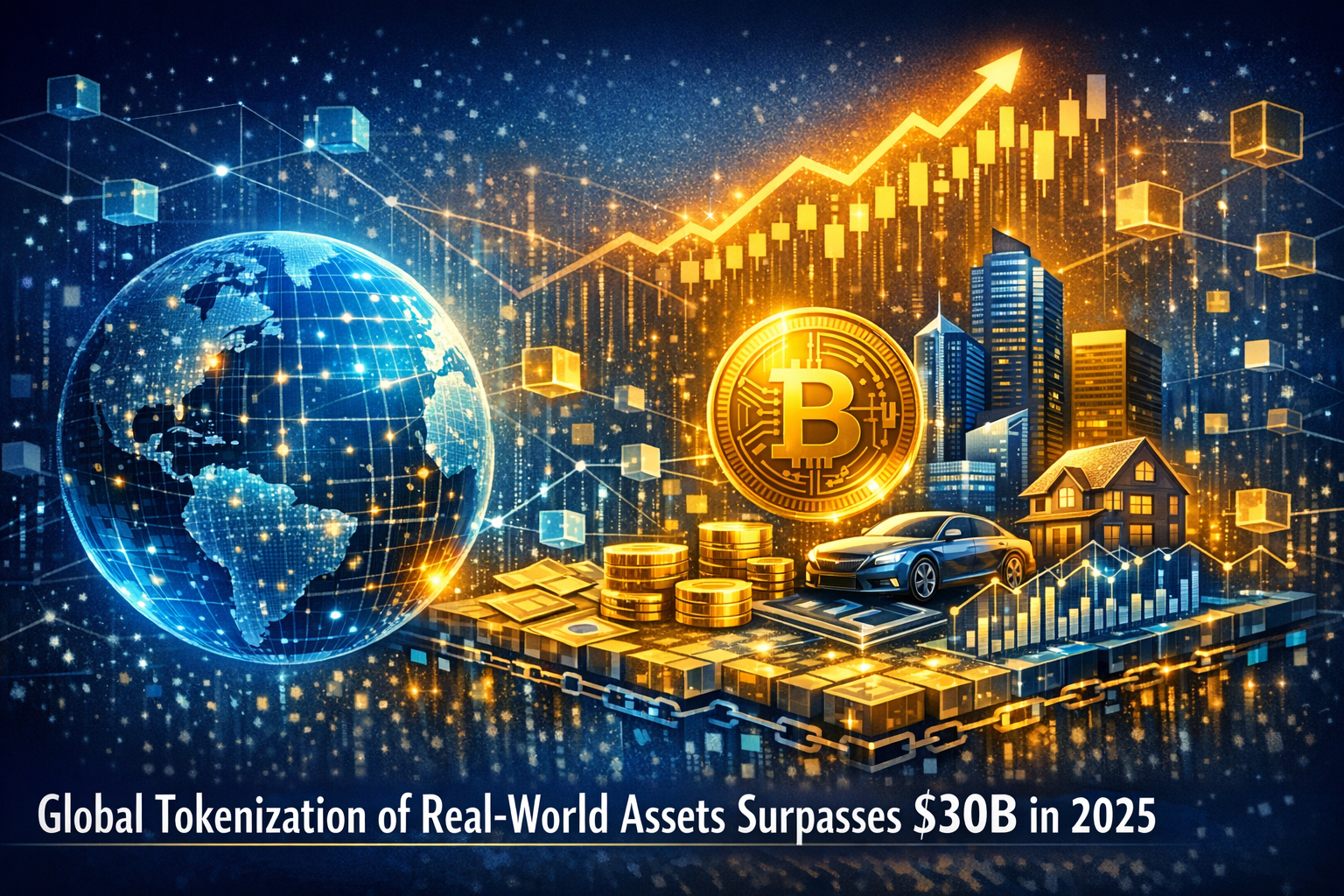
The financial world is undergoing a structural transformation unlike anything seen since the rise of the internet. In 2025, the global tokenization of real-world assets (RWAs) officially surpassed $30 billion in on-chain value, marking a major milestone in the convergence of traditional finance and blockchain technology. While cryptocurrencies like Bitcoin and Ethereum introduced the concept of digital value, tokenization takes the next step by bringing real, tangible assets—such as real estate, bonds, commodities, and equities—onto decentralized networks.
This shift represents more than just a technological evolution. It signals the beginning of a new financial paradigm where ownership becomes more accessible, transparent, and efficient on a global scale.
What Is Real-World Asset Tokenization?
At its core, tokenization is the process of converting ownership rights of a real-world asset into a digital token recorded on a blockchain. Each token represents a share or fraction of the underlying asset, enabling investors to buy, sell, or trade ownership digitally.
These assets can include:
Real estate properties
Government and corporate bonds
Commodities such as gold or oil
Private equity and venture capital funds
Fine art and collectibles
Infrastructure projects
Intellectual property and royalties
By representing these assets as tokens, blockchain technology removes many of the inefficiencies traditionally associated with asset ownership and transfer.
Why Tokenization Is Growing So Rapidly
The growth beyond $30 billion in tokenized assets is not accidental. Several powerful forces are driving institutional and retail adoption.
1. Fractional Ownership Unlocks New Opportunities
Traditionally, investing in high-value assets like commercial real estate or private equity required large amounts of capital. Tokenization allows assets to be divided into smaller digital shares, making them accessible to a wider pool of investors.
For example, instead of needing $500,000 to invest in a property, investors can purchase a fraction for as little as $100. This democratizes access to previously exclusive investment opportunities.
2. Increased Liquidity in Illiquid Markets
Many traditional assets are highly illiquid. Selling real estate or private equity can take months or even years. Tokenization enables faster transfers and secondary markets where investors can buy and sell tokenized shares more efficiently.
This liquidity unlocks capital that was previously “locked,” allowing markets to function more dynamically.
3. Institutional Adoption Is Accelerating
Major financial institutions, asset managers, and banks are now actively exploring or launching tokenized asset platforms. They recognize blockchain’s potential to:
Reduce settlement times from days to minutes
Lower administrative costs
Improve transparency and auditability
Reduce counterparty risk
Institutional involvement adds legitimacy, infrastructure, and scale to the ecosystem.
4. Blockchain Provides Transparency and Security
Blockchain technology offers a transparent and immutable ledger. Every transaction is recorded and cannot be altered retroactively, providing a verifiable ownership history.
This transparency reduces fraud risk and increases trust between parties, especially in cross-border transactions.
Real-World Use Cases Already in Action
Tokenization is no longer theoretical—it is already being implemented across multiple sectors.
Real Estate
Real estate is one of the largest and fastest-growing tokenized asset categories. Investors can now own fractions of commercial buildings, residential properties, or rental portfolios without direct ownership responsibilities.
This model enables global investors to participate in real estate markets previously limited by geography or capital requirements.
Bonds and Fixed-Income Assets
Governments and corporations are issuing tokenized bonds to streamline issuance and reduce costs. Tokenized bonds settle faster and reduce reliance on intermediaries.
This is especially attractive in global debt markets worth trillions of dollars.
Commodities
Physical commodities like gold can be tokenized, allowing investors to own digital representations backed by real reserves. This combines the stability of traditional commodities with the flexibility of blockchain trading.
Private Markets
Private equity and venture capital funds are increasingly exploring tokenization to improve liquidity and broaden investor access.
This could fundamentally reshape how startups raise capital in the future.
Why Institutions Are Taking Tokenization Seriously
The tokenization trend reflects growing institutional confidence in blockchain infrastructure.
Financial institutions see tokenization as a solution to longstanding inefficiencies in traditional finance, including:
Slow settlement systems
Complex paperwork and administration
Limited accessibility
High transaction costs
Tokenization offers automation through smart contracts, which execute transactions automatically when predefined conditions are met.
This reduces the need for intermediaries such as brokers, clearinghouses, and custodians.
The Path Toward a Multitrillion-Dollar Market
Analysts now project that tokenized real-world assets could reach trillions of dollars in value by 2030. This projection is driven by several long-term factors:
Global Digitization of Financial Infrastructure
Financial systems are gradually transitioning to digital platforms. Blockchain provides a natural foundation for this evolution.
Growing Investor Demand
Both retail and institutional investors are seeking more flexible, accessible investment opportunities.
Tokenization meets this demand by enabling smaller investment sizes and global participation.
Improved Regulatory Clarity
Governments and regulators are beginning to establish clearer frameworks for digital assets. As regulations mature, institutional adoption is expected to accelerate further.
Integration With DeFi Ecosystems
Tokenized assets can interact with decentralized finance (DeFi) protocols, enabling new financial use cases such as:
Lending against tokenized assets
Using tokenized real estate as collateral
Automated yield generation
This expands the utility of traditional assets beyond their original functions.
Challenges Still Facing Tokenization
Despite rapid growth, tokenization still faces several challenges:
Regulatory Uncertainty
Different countries have varying rules regarding digital assets, which can complicate global adoption.
Infrastructure Development
While improving, blockchain infrastructure still needs to scale further to support trillions in assets efficiently.
Education and Awareness
Many investors and institutions are still unfamiliar with tokenization and its benefits.
Adoption will increase as understanding improves.
The Future of Ownership Is Digital
The milestone of surpassing $30 billion in tokenized real-world assets represents more than just a number. It signals the early stages of a fundamental transformation in how ownership, investment, and financial infrastructure operate.
Tokenization bridges the gap between traditional finance and blockchain innovation, unlocking liquidity, accessibility, and efficiency on a global scale.
As institutional adoption accelerates and infrastructure matures, tokenization is positioned to become one of the most important financial trends of the next decade.
The shift has already begun—and by 2030, tokenized real-world assets could reshape global finance into a more open, efficient, and inclusive system for investors worldwide.