
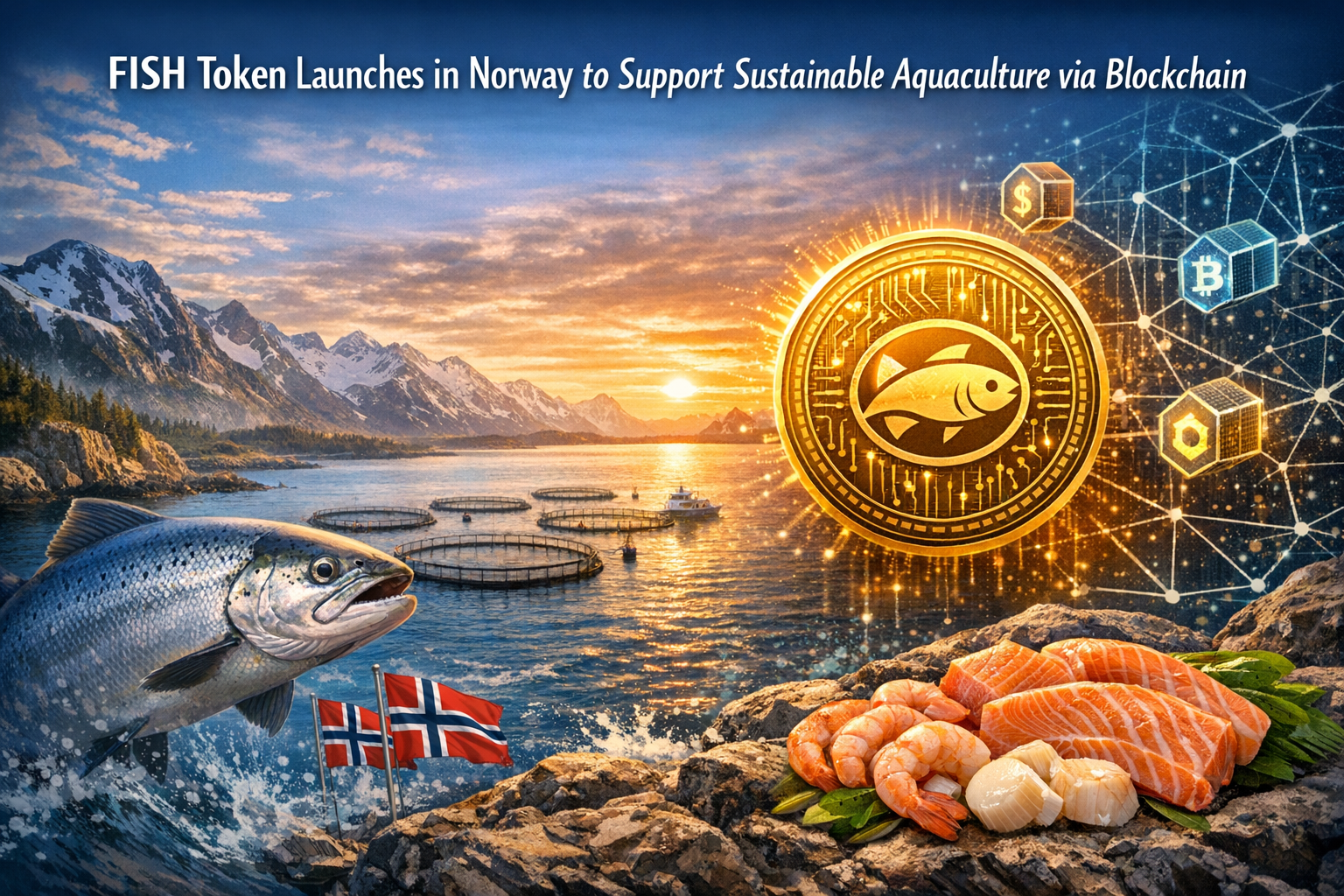
Norway has long been recognized as a global leader in responsible aquaculture and seafood innovation. With the official launch of the FISH Token, the country is now taking a bold step at the intersection of sustainability, finance, and blockchain technology. This new digital asset introduces a tokenized investment model designed to support eco‑friendly aquaculture while opening the doors for global participation in real‑world asset (RWA) tokenization.
A New Model for Sustainable Seafood
The FISH Token represents a fractionalized, blockchain‑based exposure to sustainable aquaculture operations. Instead of traditional investment structures that often limit access to large institutions, the token allows a broader range of investors to participate in environmentally responsible seafood production.
At its core, the project focuses on:
- Environmentally conscious fish farming practices
- Responsible feed sourcing and reduced ecological impact
- Transparent supply chains from farm to consumer
- Long‑term sustainability of marine ecosystems
By aligning financial incentives with environmental responsibility, the FISH Token aims to demonstrate that profitability and sustainability can grow together.
Why Norway?
Launching in Norway is a strategic and symbolic choice. The country is known for its strict environmental regulations, advanced aquaculture technologies, and global leadership in sustainable seafood exports. These factors provide a strong foundation for a blockchain‑enabled investment product that prioritizes credibility and real‑world impact.
Norway’s aquaculture sector already emphasizes traceability, innovation, and ecological balance. Integrating blockchain technology enhances these strengths by offering immutable records, verifiable data, and increased transparency for investors and consumers alike.
Real‑World Asset Tokenization with Impact
The FISH Token is part of a broader movement toward real‑world asset tokenization, where tangible industries—such as agriculture, energy, and commodities—are represented on‑chain. What sets FISH apart is its explicit environmental mission.
Token holders gain exposure to:
- Sustainable seafood production revenue streams
- On‑chain transparency of operational data
- A growing market driven by global demand for responsibly sourced food
This model reduces barriers to entry while enabling capital to flow directly into projects that generate measurable environmental benefits.
Global Access, Local Impact
Through blockchain infrastructure, the FISH Token allows investors from around the world to support Norwegian aquaculture without traditional geographic or financial constraints. This democratization of access empowers individuals and institutions alike to align their portfolios with sustainability goals.
At the same time, the capital raised supports local operations, innovation, and job creation—ensuring that global participation translates into tangible regional benefits.
The Future of Sustainable Investment
As environmental, social, and governance (ESG) considerations become central to modern investing, projects like the FISH Token highlight how digital assets can move beyond speculation. By connecting blockchain technology with real‑world industries and measurable impact, the initiative sets a precedent for the next generation of sustainable finance.
The launch of the FISH Token in Norway is more than a product release—it is a signal that blockchain can play a meaningful role in building a more transparent, responsible, and sustainable global economy.