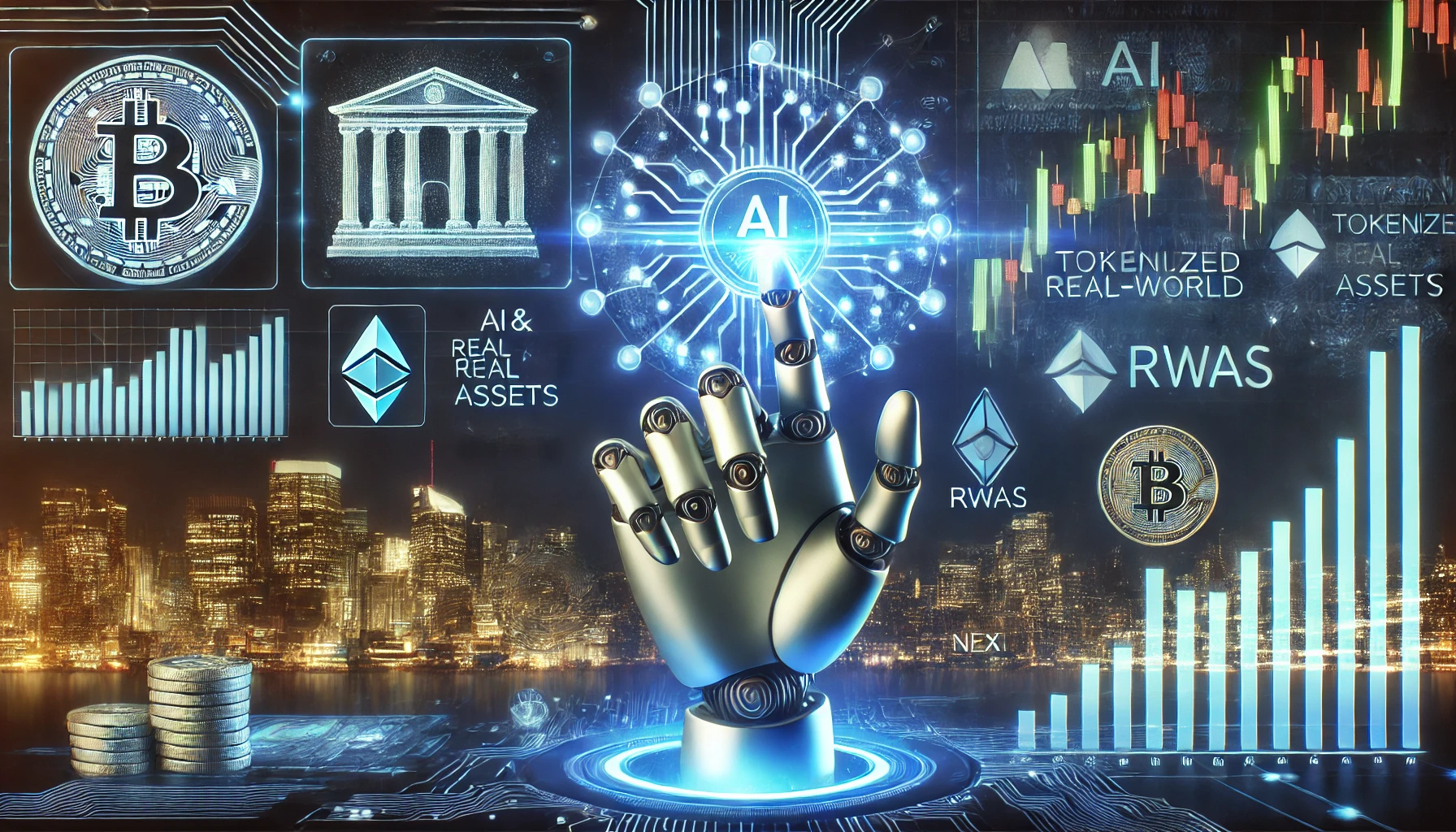

Ethereum, the world’s leading smart contract platform, is preparing to launch a groundbreaking protocol standard designed specifically for AI agents. This move represents a significant step forward in the integration of artificial intelligence directly into blockchain infrastructure, allowing developers to build autonomous agents capable of executing complex tasks on-chain with minimal human intervention.
Traditionally, decentralized finance (DeFi) applications and tokenized asset platforms have relied on predefined smart contracts that execute according to static rules. While these contracts are secure and transparent, they lack adaptive intelligence, which limits their ability to respond dynamically to market conditions, user behavior, or real-world events. The new Ethereum AI agents standard aims to address this limitation by embedding AI logic directly into the blockchain ecosystem.
By enabling smart contracts to interact with AI agents, Ethereum developers are opening the door to a variety of innovative use cases. In DeFi, AI-powered lending and borrowing protocols could automatically optimize interest rates, manage collateral more effectively, and even execute complex arbitrage strategies without requiring manual oversight. Tokenized asset platforms could employ AI agents to analyze market trends, recommend trades, and manage portfolios autonomously. Even NFT marketplaces could leverage these agents to evaluate asset value, detect fraudulent activity, or provide dynamic pricing suggestions based on demand patterns.
Beyond financial applications, the implications of AI agents on Ethereum are vast. Decentralized Autonomous Organizations (DAOs) could utilize AI agents to improve governance by predicting voter turnout, suggesting proposals based on historical trends, or even executing multi-step governance actions automatically. Supply chain and logistics applications could benefit from predictive maintenance, automated verification of goods, and optimization of delivery routes—all secured by the immutability and transparency of Ethereum’s blockchain.
One of the most exciting aspects of this development is the potential for interoperability. AI agents built on Ethereum could interact seamlessly with other decentralized protocols, creating a network of autonomous agents capable of collaborating and sharing information. This could lead to entirely new classes of decentralized applications that are adaptive, self-optimizing, and resilient, bridging the gap between artificial intelligence and blockchain in a way that has never been seen before.
Of course, with great power comes great responsibility. Integrating AI into blockchain raises important questions around security, ethics, and regulatory compliance. Developers will need to ensure that AI agents operate transparently, follow pre-defined rules, and cannot be manipulated by malicious actors. The Ethereum community is already exploring standards for auditing, testing, and validating these agents to maintain trust and reliability.
Despite the challenges, the launch of the AI agents standard signals a bold vision for the future of decentralized technology. Ethereum is not just evolving—it is positioning itself at the forefront of a new era where autonomous intelligence and blockchain converge. For developers, investors, and enthusiasts, the opportunities are immense. Smarter DeFi, more dynamic tokenized assets, and AI-enhanced DAOs could soon become the new normal.
In the coming months, as the Ethereum AI agents standard rolls out, the blockchain ecosystem will witness a transformation that could redefine how we interact with digital finance, governance, and decentralized applications. By merging AI and blockchain in a secure, decentralized, and programmable environment, Ethereum is set to unlock possibilities that were once the domain of science fiction. The future of on-chain intelligence is here, and it’s intelligent, autonomous, and incredibly promising.