A New Era of Fractional Property Ownership Goes Live
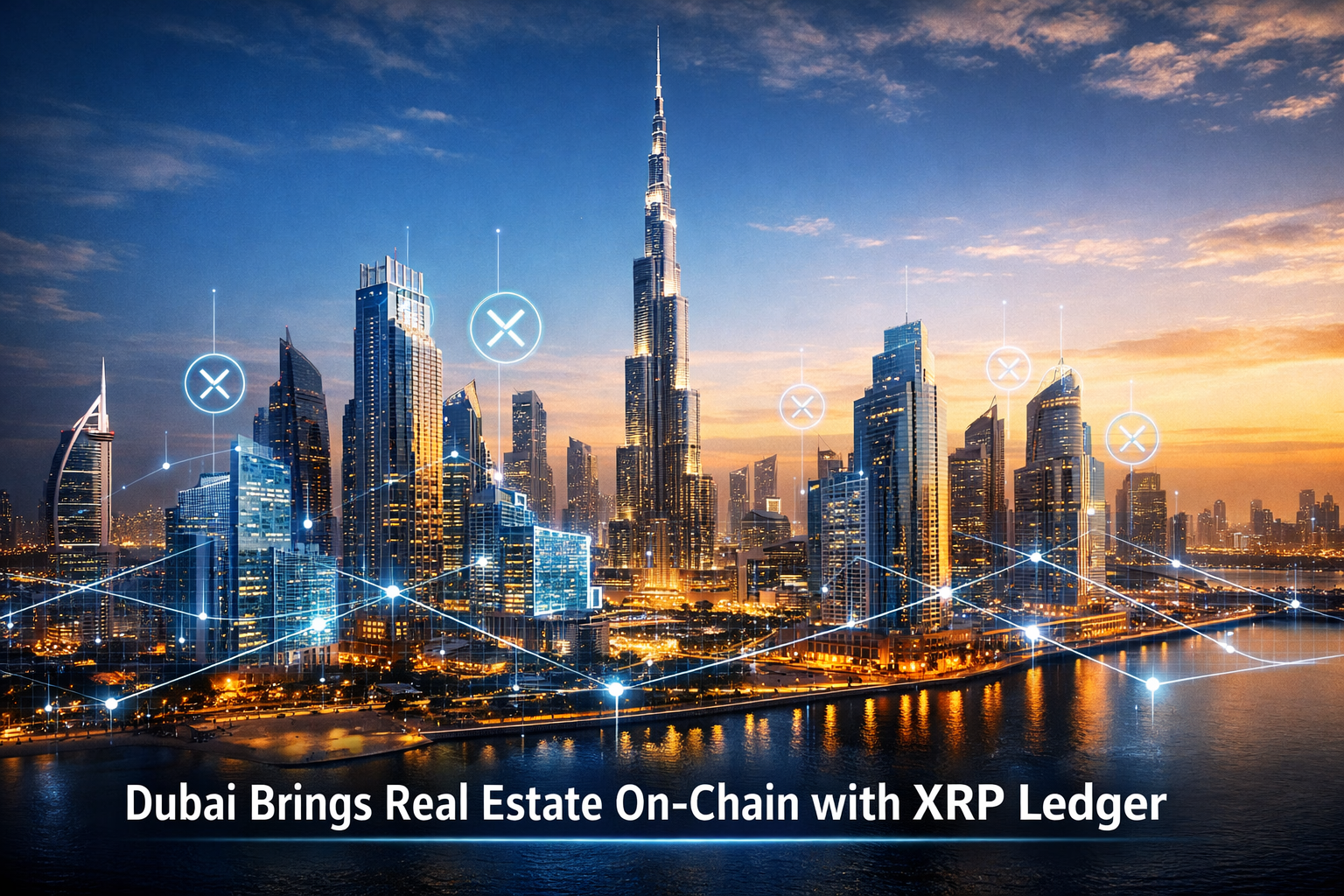
Dubai has once again positioned itself at the forefront of digital innovation with the launch of a groundbreaking real estate tokenization platform built on the XRP Ledger. Announced by Dubai’s Land Department (DLD), the initiative introduces blockchain-based property title deeds, enabling fractional ownership of real estate assets in one of the world’s most dynamic property markets.
This move represents a significant leap toward merging traditional real estate with decentralized finance infrastructure — making property investment more accessible, transparent, and efficient than ever before.
What Is Real Estate Tokenization?
Real estate tokenization is the process of converting property ownership rights into digital tokens recorded on a blockchain. Each token represents a fractional share of a real-world asset, allowing multiple investors to own portions of a single property without the need for complex legal structures or intermediaries.
By leveraging the XRP Ledger, Dubai’s new platform ensures:
-
Immutable ownership records
-
Fast and low-cost transactions
-
Institutional-grade reliability
-
Scalability for mass adoption
Tokenized title deeds issued through the platform are fully compliant with local regulations, reinforcing Dubai’s commitment to combining innovation with legal certainty.
Why the XRP Ledger?
The XRP Ledger (XRPL) was selected for its proven track record in handling high-throughput financial transactions with minimal fees and near-instant settlement. Unlike many experimental blockchain environments, XRPL has operated reliably for over a decade, making it a strong foundation for real-world asset (RWA) tokenization at scale.
Key advantages include:
-
Energy-efficient consensus mechanism
-
Native support for tokenized assets
-
High transaction finality
-
Strong enterprise and institutional adoption
These features make the XRP Ledger particularly well-suited for a government-backed real estate initiative where trust, performance, and longevity are critical.
Fractional Ownership: Lower Barriers, Broader Access
Traditionally, investing in Dubai real estate has required significant capital, legal overhead, and long settlement times. Tokenization changes this dynamic completely.
With fractional ownership:
-
Investors can enter the market with smaller amounts of capital
-
Properties become more liquid and divisible
-
Portfolio diversification becomes easier
-
Cross-border participation is simplified
This opens the door for a new generation of global investors who previously found premium real estate markets inaccessible.
A Strategic Step Toward Dubai’s Digital Economy Vision
The platform aligns closely with Dubai’s broader digital transformation and Web3 strategy. The emirate has consistently positioned itself as a global hub for blockchain adoption, crypto regulation, and digital asset innovation.
By tokenizing real estate title deeds:
-
Government processes become more transparent
-
Property transfers become faster and more efficient
-
Fraud risks are reduced
-
Market data becomes more accessible
This initiative also sets a powerful precedent for other jurisdictions exploring blockchain-based land registries and asset digitization.
Implications for the Global Real Estate Market
Dubai’s move signals a broader shift in how property ownership may evolve worldwide. As real-world asset tokenization gains traction, real estate could become:
-
More liquid
-
More programmable
-
More globally accessible
Institutional investors, retail participants, and developers alike are likely to watch this rollout closely, as it may serve as a blueprint for future tokenized property markets across Europe, Asia, and beyond.
The launch of Dubai’s real estate tokenization platform on the XRP Ledger is more than a technological upgrade — it is a structural transformation of property ownership itself. By combining regulatory clarity, blockchain efficiency, and fractional investment models, Dubai is redefining what it means to invest in real estate in the digital age.
As tokenization continues to bridge traditional assets and blockchain infrastructure, initiatives like this may soon become the standard rather than the exception.