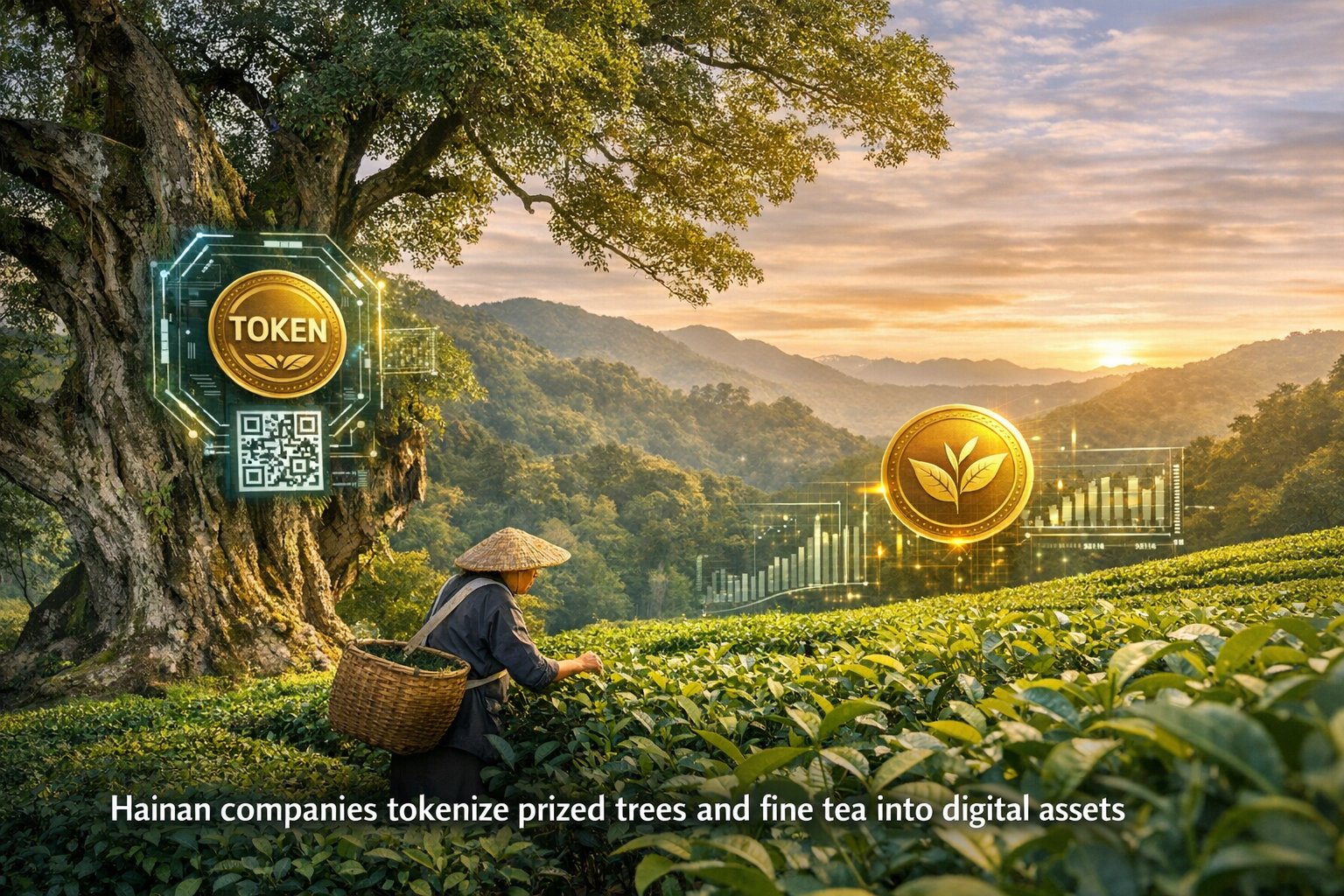
In China’s southern province of Hainan, a quiet but profound transformation is taking place at the intersection of nature, technology, and finance. Companies are beginning to tokenize prized natural resources—such as centuries-old trees and premium tea leaves—turning tangible, location-bound assets into digital tokens that can be traded, financed, and monitored on blockchain-based platforms. This emerging practice highlights how real-world asset (RWA) tokenization is expanding far beyond traditional financial instruments into the physical economy itself.
From Forests and Tea Fields to Blockchain Ledgers
Hainan, known for its tropical climate and fertile land, is home to rare hardwood trees and highly valued tea varieties. These resources have long been difficult to monetize without selling them outright or waiting years for harvests to mature. Tokenization offers an alternative.
Under this model, ownership rights or future economic value of a physical asset—such as the yield of a tea plantation or the long-term value of a protected tree—are represented digitally through blockchain tokens. Each token is linked to verified data about the underlying asset, including its location, age, quality, and projected output. Investors can then purchase fractional exposure to these assets without physically owning or managing them.
This approach allows local companies to raise capital while keeping the resources intact, aligning financing needs with preservation and long-term value creation.
Why Natural Resource Tokenization Matters
Unlike financial assets, natural resources are traditionally illiquid, opaque, and difficult to value in real time. Tokenization introduces transparency and liquidity to assets that were previously accessible only to a narrow group of buyers or institutions.
By digitizing ownership rights, companies can:
-
Unlock capital without immediate extraction or liquidation
-
Enable fractional investment in high-value natural assets
-
Improve traceability and auditability of resource management
-
Attract technology-savvy and ESG-focused investors
For investors, tokenized natural resources offer exposure to tangible value backed by real goods—an increasingly attractive proposition in a world shaped by inflation concerns and market volatility.
Blockchain as a Trust Layer
At the core of this model is blockchain technology, which acts as a trust layer between asset owners and investors. Smart contracts can encode rules around ownership transfers, revenue distribution, and compliance requirements, reducing reliance on intermediaries.
In the case of tokenized tea or trees, blockchain records can also support sustainability claims. Data related to environmental protections, harvesting limits, and certification standards can be immutably stored and audited, helping prevent fraud and misrepresentation.
This is particularly relevant as global investors become more cautious about greenwashing and demand verifiable proof of ethical sourcing and environmental stewardship.
China’s Controlled Experiment with RWA Innovation
China has taken a cautious but pragmatic approach to blockchain innovation. While speculative crypto trading remains tightly regulated, blockchain applications tied to real economic activity have found growing support—especially when they serve regional development goals.
Hainan’s experimentation with natural resource tokenization fits neatly within this framework. By focusing on tangible assets and capital formation rather than speculative trading, local firms can innovate while staying aligned with regulatory expectations.
These projects also serve as pilot programs that could inform broader adoption across agriculture, forestry, and commodities if successful.
Challenges and Open Questions
Despite its promise, tokenizing natural resources is not without risks. Accurate valuation remains complex, and investor understanding of long-term biological assets can be limited. Regulatory clarity around digital ownership rights, investor protections, and cross-border participation is still evolving.
There is also the ethical question of financializing nature. While tokenization can support conservation by assigning economic value to preservation, critics argue that it could encourage excessive commodification if not properly governed.
The success of these initiatives will depend heavily on transparency, oversight, and alignment between financial incentives and environmental outcomes.
A Glimpse into the Future of Real-World Assets
The tokenization of trees and tea in Hainan illustrates a broader trend reshaping global finance: the migration of real-world value onto digital rails. As blockchain infrastructure matures, assets once considered too physical, too local, or too illiquid are being reimagined as programmable, investable digital instruments.
This shift suggests that the future of RWA tokenization will not be limited to bonds, real estate, or commodities markets—but may extend into forests, farms, and ecosystems themselves. If done responsibly, it could redefine how capital flows into the real economy while preserving the resources that sustain it.
In Hainan’s misty tea fields and ancient groves, the next phase of blockchain adoption is quietly taking root—one token at a time.