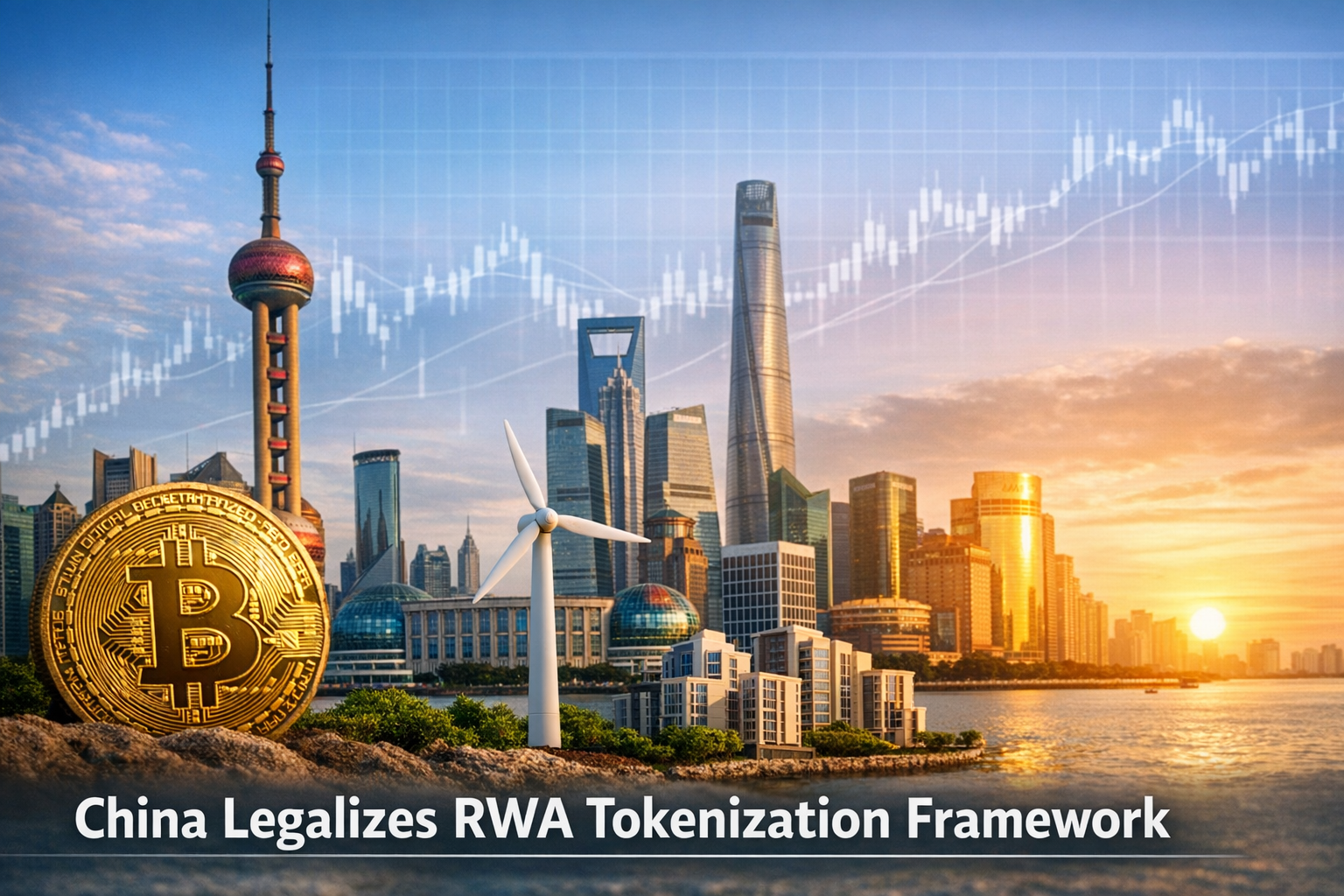
China has taken a significant step toward reshaping the future of digital finance by announcing a legalized framework for real-world asset (RWA) tokenization through offshore structures. The move has already sent a strong signal to global markets, triggering sharp gains across Chinese technology, blockchain, and infrastructure-related stocks. More importantly, it marks a rare moment of regulatory clarity from one of the world’s most influential economies—an event with implications that stretch far beyond China’s borders.
Regulatory Clarity Changes the Game
For years, China’s stance on crypto-related innovation has been viewed as restrictive, particularly after the domestic crackdown on cryptocurrency trading and mining. However, the new RWA tokenization framework suggests a more nuanced strategy: separating speculative crypto activity from utility-driven blockchain adoption. By allowing tokenization to operate offshore, regulators maintain tight control over domestic financial stability while still enabling Chinese capital, enterprises, and innovation to participate in the global digital asset economy.
This distinction is critical. RWA tokenization focuses on digitizing ownership and cash flows of tangible assets—such as clean energy infrastructure, real estate, and logistics networks—rather than promoting high-risk retail crypto speculation. In effect, China is signaling that blockchain technology is welcome when it serves measurable economic utility.
Why Markets Reacted So Strongly
Following the announcement, investors rushed into stocks linked to blockchain infrastructure, fintech platforms, and advanced manufacturing. The reason is simple: regulatory certainty reduces risk. Tokenization has long been viewed as one of the most promising use cases for blockchain, but adoption has been slow due to legal ambiguity. China’s framework provides a blueprint that institutions can actually build around.
For companies operating in renewable energy, industrial real estate, and large-scale infrastructure, tokenization opens new financing channels. Assets that were previously illiquid can now be fractionalized, allowing broader investor participation and more efficient capital allocation. This is especially relevant in sectors aligned with China’s long-term policy goals, such as clean energy and sustainable development.
Clean Energy and Real Estate Take Center Stage
Two sectors stand out as primary beneficiaries: clean energy and real estate. Tokenizing solar farms, wind projects, or green industrial parks allows developers to raise capital faster while offering investors transparent, on-chain exposure to real-world yields. Smart contracts can automate revenue distribution, improve reporting standards, and reduce administrative overhead.
In real estate, tokenization could transform how large commercial properties are financed and managed. Fractional ownership lowers entry barriers for institutional and qualified investors, while blockchain-based records improve transparency and reduce disputes. For China, this approach also helps modernize capital markets without reopening the door to uncontrolled speculation.
Offshore Tokenization as a Strategic Compromise
The offshore structure is not a limitation—it is a strategic compromise. By keeping token issuance and trading outside mainland China, regulators can monitor exposure while still allowing Chinese firms to remain competitive globally. This model could become a template for other jurisdictions that want innovation without sacrificing control.
At the same time, offshore RWA markets are inherently global. International investors gain indirect access to Chinese-linked assets, while Chinese companies benefit from foreign liquidity. This creates a bridge between traditional finance and blockchain-based infrastructure at a scale few countries can match.
Global Implications for the RWA Narrative
China’s move reinforces one of the strongest crypto narratives of the decade: the shift from speculation to utility. As major economies begin to formalize RWA frameworks, tokenization is no longer a niche experiment—it is becoming a foundational layer of modern finance. Combined with similar initiatives in Europe and the Middle East, China’s announcement accelerates institutional confidence in blockchain as a settlement and ownership layer.
For the broader crypto market, this is a powerful signal. Infrastructure tokens, compliance-focused platforms, and enterprise-grade blockchains stand to benefit the most. The emphasis is no longer on hype cycles, but on integration with real economic systems.
Looking Ahead
China’s legalization of an offshore RWA tokenization framework may prove to be a turning point for both global finance and blockchain adoption. By embracing tokenization while maintaining regulatory discipline, China is demonstrating how large economies can innovate without losing control.
As capital flows continue to follow clarity, the long-term winners are likely to be projects and platforms that align with real-world utility, compliance, and sustainability. In that sense, China’s latest move doesn’t just impact local markets—it reshapes the global conversation around what the future of tokenized finance will look like.