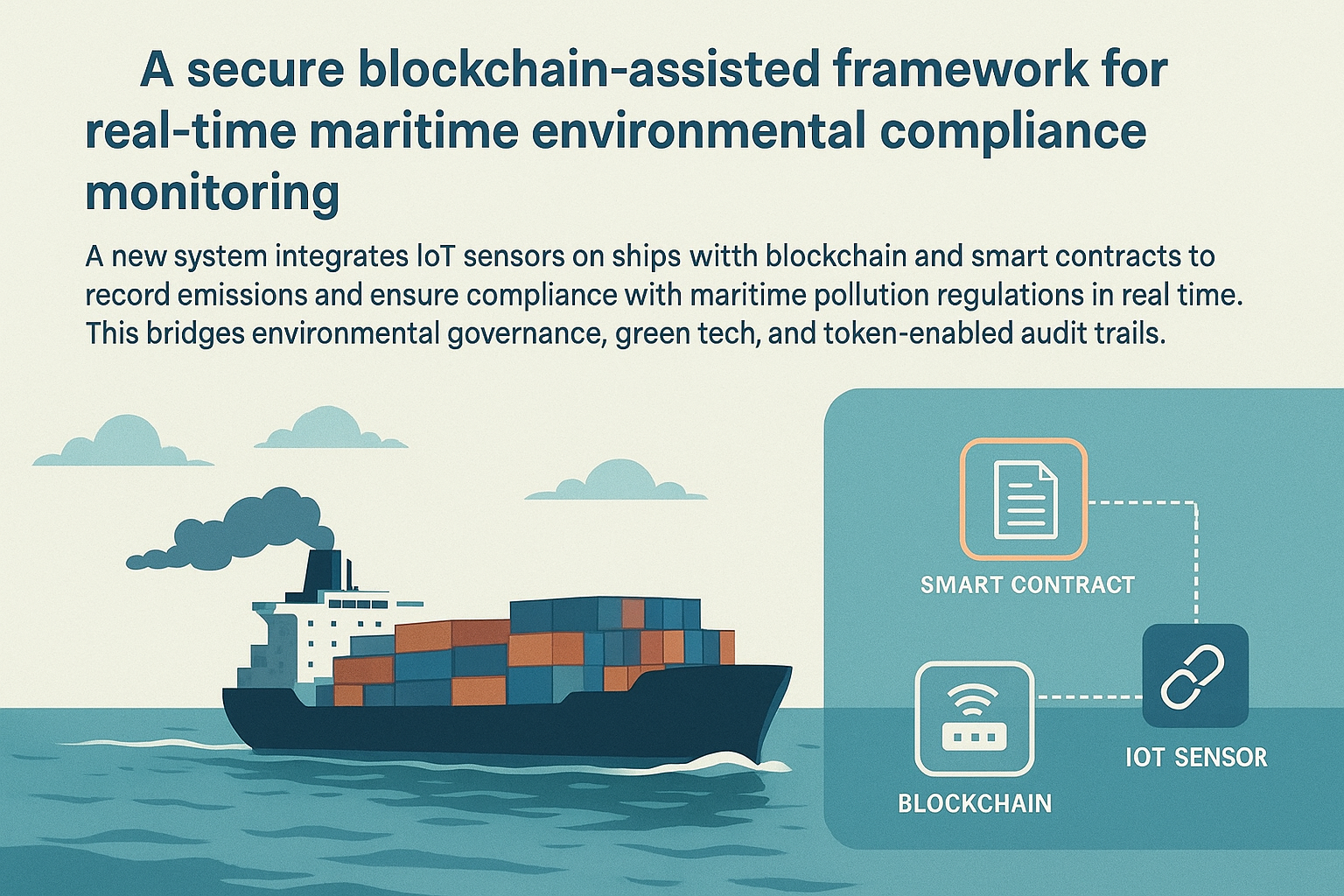
Carbon markets have long struggled with a fundamental challenge: trust. While carbon credits are designed to represent measurable climate impact, questions around double counting, opaque registries, and unverifiable claims have hindered the credibility of voluntary and compliance markets alike. Now, a new blockchain-based framework aims to address these challenges head-on by transforming every tonne of carbon credit into a unique, traceable digital asset.
Carbon Asset NFTs: A New Standard for Transparency
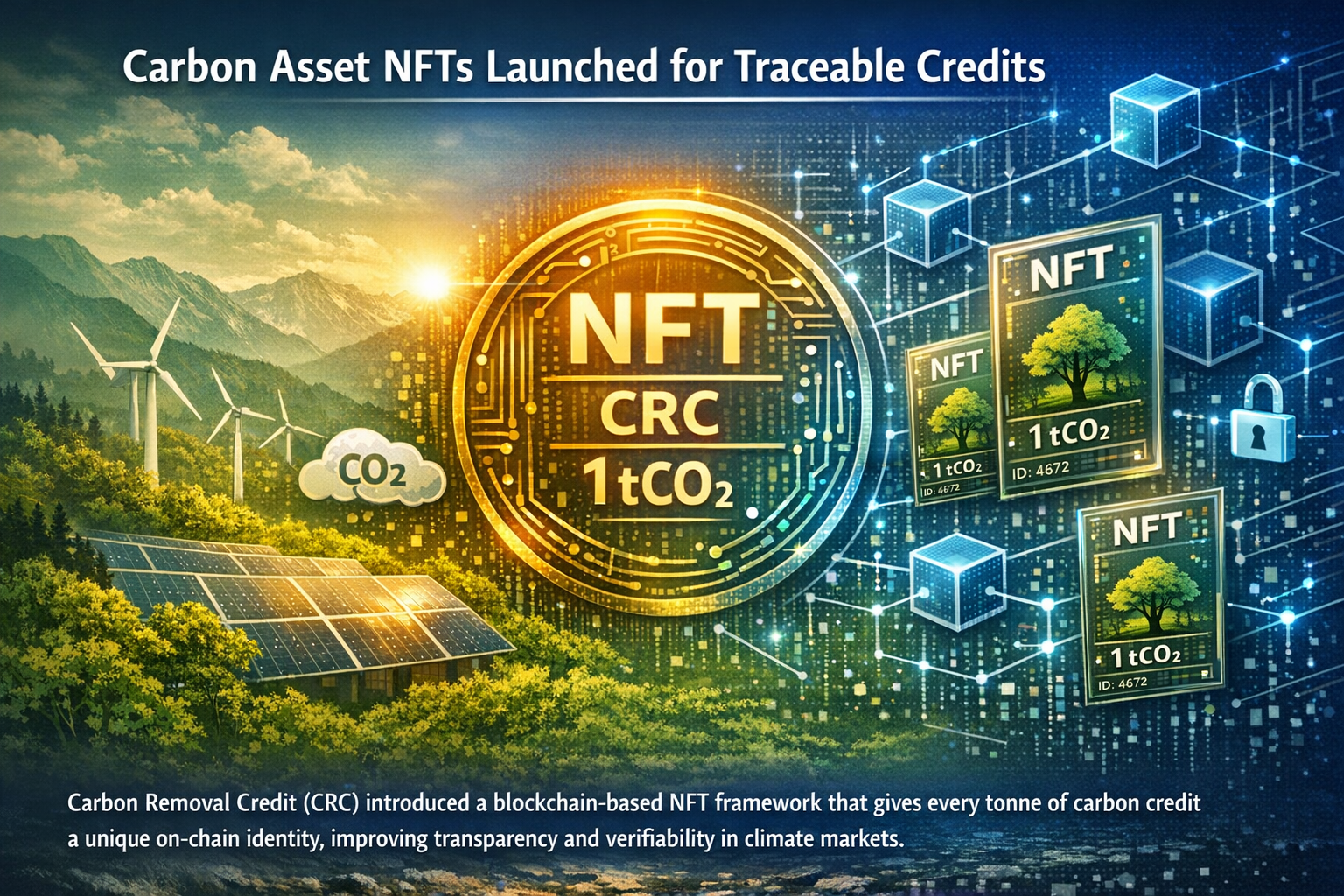
The newly introduced Carbon Removal Credit (CRC) framework leverages blockchain technology to mint each verified tonne of carbon removal as a distinct non-fungible token (NFT). Unlike traditional carbon credits that exist as entries in centralized registries, these Carbon Asset NFTs carry a permanent, tamper-resistant on-chain identity.
Each NFT contains embedded metadata detailing:
-
The specific carbon removal project
-
Verification standards and methodologies
-
Issuance date and retirement status
-
Geographic origin
-
Audit and certification records
By assigning every credit its own digital fingerprint, the system eliminates ambiguity. No two tonnes are interchangeable without traceability, and every transaction is recorded transparently on the blockchain.
Why This Matters for Climate Markets
Carbon markets are entering a phase of rapid expansion. Corporations, financial institutions, and even governments are increasing their reliance on offsets to meet net-zero commitments. However, scaling these markets without strengthening integrity risks undermining climate goals.
The CRC NFT framework introduces several key improvements:
1. Elimination of Double Counting
Because each tonne exists as a unique token, it cannot be duplicated or claimed by multiple parties. Retirement of the NFT is recorded immutably, ensuring that once a credit is used, it cannot re-enter circulation.
2. Real-Time Verifiability
Buyers no longer need to rely solely on PDF certificates or third-party confirmations. Ownership, transfer history, and retirement status can be verified instantly on-chain.
3. Improved Liquidity and Market Efficiency
Tokenization enables programmable settlement, faster transfers, and integration into digital marketplaces. Carbon credits become interoperable assets that can move seamlessly across platforms while maintaining integrity.
4. Enhanced Investor Confidence
Institutional participants often hesitate to enter carbon markets due to opacity and reputational risk. Transparent, auditable NFTs reduce uncertainty and provide the assurance required for larger capital allocations.
From Environmental Impact to Digital Infrastructure
At its core, the CRC initiative reflects a broader evolution: climate finance is becoming digital infrastructure. By merging environmental science with blockchain architecture, carbon credits transform from static registry entries into dynamic, trackable financial instruments.
This shift aligns with several macro trends:
-
Growing demand for ESG-aligned investments
-
Increased regulatory scrutiny around greenwashing
-
The rise of tokenized real-world assets
-
Demand for immutable audit trails
Blockchain technology is uniquely suited to address these needs. Its decentralized ledger structure ensures transparency without compromising security, while smart contracts automate compliance and reporting.
The Broader Implications for Net-Zero Goals
The credibility of carbon removal credits is essential for global decarbonization strategies. High-integrity removal projects—such as direct air capture, biochar, afforestation, and soil carbon sequestration—require long-term funding. Transparent NFT-based credits create a stronger financial bridge between climate innovators and capital providers.
Furthermore, tokenized credits can integrate with corporate sustainability dashboards, automated ESG reporting systems, and decentralized finance platforms. This interoperability opens the door to:
-
Real-time emissions tracking
-
Automated offsetting mechanisms
-
Transparent Scope 3 emissions accounting
-
Programmable compliance reporting
In effect, climate accountability becomes digitally native.
Challenges and Considerations
While the promise is significant, adoption will depend on collaboration between verification bodies, registries, regulators, and blockchain developers. Standardization of metadata, cross-chain compatibility, and regulatory alignment will be crucial to ensure widespread acceptance.
Additionally, technological innovation must not overshadow scientific rigor. Robust measurement, reporting, and verification (MRV) processes remain foundational. Blockchain enhances transparency—but it does not replace environmental integrity.
A Turning Point for Climate Accountability
The launch of Carbon Asset NFTs represents more than technological experimentation. It signals a structural shift in how climate assets are issued, tracked, and retired. By giving every tonne of carbon removal a unique on-chain identity, CRC is helping transform carbon markets from opaque systems into transparent, auditable ecosystems.
As climate commitments tighten and scrutiny intensifies, the demand for verifiable impact will only grow. Blockchain-based carbon credits may well become the gold standard for trust in environmental finance—where every tonne counts, and every tonne can be traced.
The future of carbon markets is not just greener. It is smarter, more transparent, and digitally secured.