

Bitcoin’s market shook hard on a single day of trading, sending prices tumbling to $65,000 and nerves flaring. Reports note the move wiped out a big chunk of recent gains and pushed many recent buyers into loss.
Price action this sharp rarely comes without a story behind it — and this one had several threads pulling at once.
Bitcoin: Capitulation And Selling Pressure
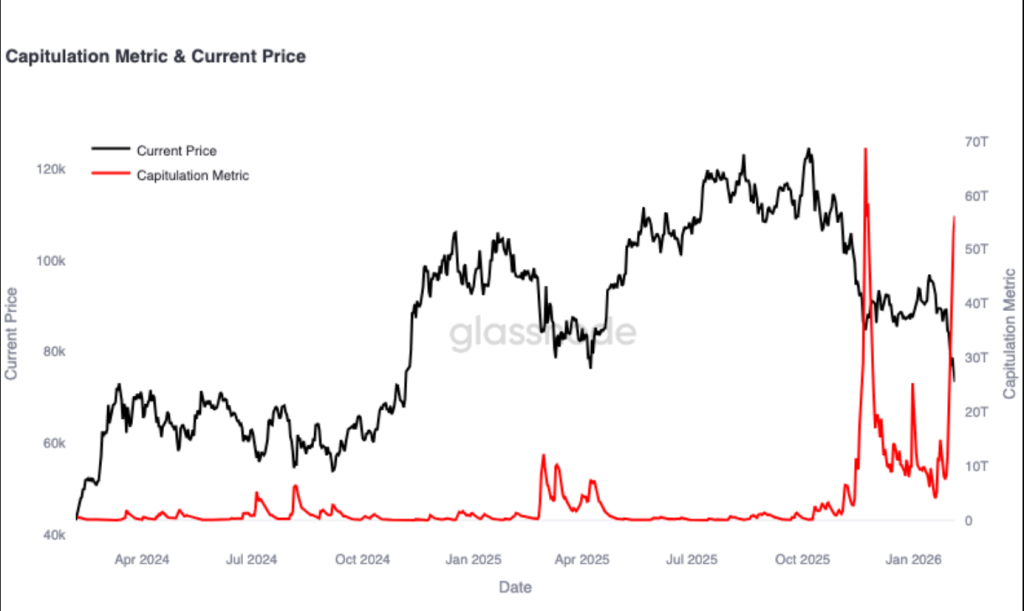
According to Glassnode, the spike in forced sales is one of the biggest seen in about two years. Traders who had used borrowed money were hit first.
Liquidations swept through positions, and many coins moved from hands that bought recently to hands that sold quickly.
Realized losses climbed to the highest levels since late 2022, with close to $890 million a day recorded on a seven-day average.
The sell-off unfolded over roughly 10 hours of intense trading, with panic and program trades both playing a role.
The $BTC capitulation metric has printed its second-largest spike in two years, highlighting a sharp escalation in forced selling.
These stress events typically coincide with accelerated de-risking and elevated volatility as market participants reset positioning.… pic.twitter.com/mcvVqXJcYq— glassnode (@glassnode) February 5, 2026
Prices Fall Below Buyer Cost Lines
Reports say Bitcoin’s market price has fallen under several on-chain cost markers that many investors watch. Short-term buyers who picked up coins in recent months now sit below their purchase price.
That creates a kind of pressure where emotional selling can feed into more selling. Active investor costs and broader market averages were all above the spot price, which made the slide feel deeper.
When a market drops under the average cost of recent buyers, volatility tends to rise and traders begin hunting for the next reliable support.
News Flow And Timing
The move comes after a run of strong gains earlier in the year. Price was last at these levels back in November 2024, just before US President Donald Trump won his reelection.
That timing put the fall in sharper relief for some observers who had started to see those prior highs as a fresh floor.
Headlines and big trades added friction to the market. Social chatter and rapid shifts in order books amplified selling, and some long-term holders did move to lock in gains or cut risk.
What The Numbers Tell Us
Based on on-chain measures, the recent drop forced a large group of holders to realize losses, not just paper losses but actual transactions where coins left wallets at a lower price than they were bought.
That kind of clearing can remove built-up leverage and leave a cleaner market on the other side. It also leaves fewer buyers near current levels, which means rebounds can be choppy and uneven.
Featured image from Unsplash, chart from TradingView