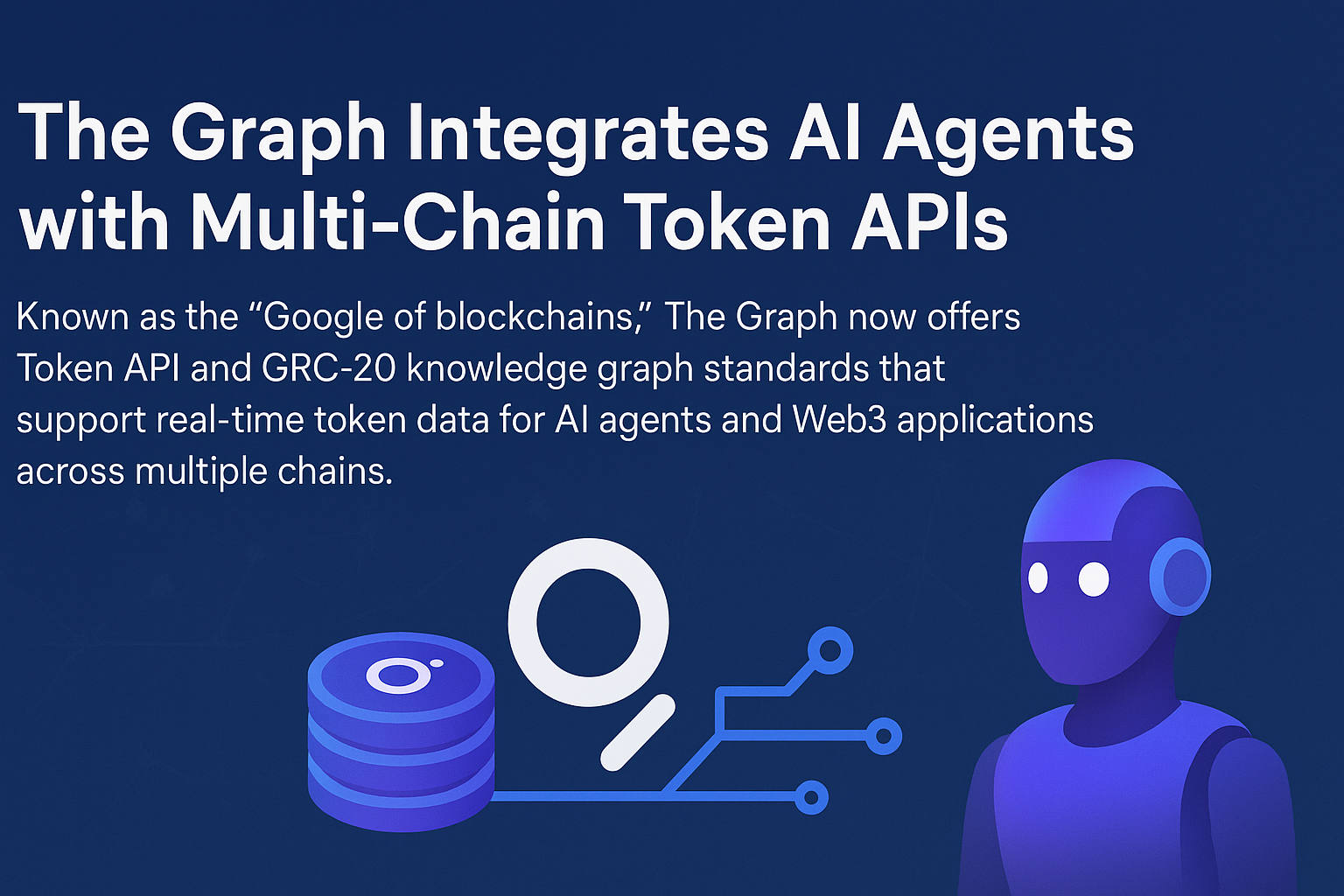
The convergence of artificial intelligence and blockchain is no longer a futuristic concept — it’s actively reshaping how crypto ecosystems are built, used, and valued. As we move deeper into 2026, AI integration across decentralized networks is giving rise to entirely new token narratives, transforming everything from on-chain analytics to autonomous trading, governance, and application design.
What began as experimental tooling has evolved into full-scale AI-powered crypto ecosystems, where adaptive machine learning models operate directly on-chain or alongside decentralized infrastructure. This shift is creating smarter networks, more efficient capital allocation, and fresh investment themes that are capturing the attention of developers, traders, and institutions alike.
Let’s explore how this transformation is unfolding — and why AI-linked tokens are becoming one of the most compelling stories in digital assets.
From Static Protocols to Intelligent Networks
Traditional blockchain systems are largely deterministic. Smart contracts execute predefined rules, DeFi protocols follow fixed parameters, and governance decisions rely heavily on human participation. While this structure brought transparency and trustlessness, it also introduced inefficiencies: slow reaction times, rigid risk management, and limited adaptability to rapidly changing market conditions.
AI changes this equation.
By embedding machine learning models into crypto infrastructure, networks can now:
Dynamically adjust protocol parameters based on market conditions
Detect anomalies and potential exploits in real time
Optimize liquidity deployment across pools and chains
Forecast demand for blockspace, storage, or compute
Personalize user experiences inside decentralized applications
Instead of static code, we’re entering an era of adaptive blockchain systems — ecosystems that learn, evolve, and respond automatically.
This intelligence layer is becoming a defining feature of next-generation crypto platforms.
The Rise of AI-Native Tokens
One of the most visible outcomes of this trend is the emergence of AI-native tokens — digital assets that are directly tied to machine learning infrastructure, agent networks, or autonomous services.
Unlike earlier utility tokens that simply paid for gas or access, these new tokens often serve multiple roles at once:
Fuel for AI inference and compute
Incentives for data providers and model trainers
Governance rights over evolving algorithms
Settlement layers for autonomous agents
Collateral for decentralized AI marketplaces
In many ecosystems, tokens now represent participation in an intelligent economy rather than just ownership of a protocol.
This has created entirely new narratives for investors. Instead of evaluating projects solely on total value locked or transaction volume, market participants are increasingly focused on metrics like:
Model performance and accuracy
Agent activity levels
Data throughput
Inference demand
Autonomous transaction volume
Crypto valuation is becoming intertwined with AI productivity.
Autonomous Agents Are Becoming On-Chain Actors
Perhaps the most disruptive development is the rise of autonomous AI agents operating directly within blockchain environments.
These agents can:
Execute trades based on predictive models
Manage DeFi strategies without human input
Rebalance portfolios across chains
Participate in governance
Negotiate liquidity provisioning
Deploy smart contracts
Monitor network health
In effect, they act as independent economic participants.
Instead of users manually interacting with protocols, AI agents increasingly handle optimization in the background. For retail participants, this means simpler interfaces and smarter automation. For institutions, it unlocks scalable strategies that operate 24/7 with minimal oversight.
As these agents proliferate, blockchains are starting to resemble digital economies populated not just by humans — but by software entities competing, collaborating, and transacting in real time.
Tokens become the coordination mechanism for this new machine-driven activity.
Smarter On-Chain Activity Through Machine Learning
Another major shift lies in how data is processed and utilized across crypto networks.
Historically, blockchain analytics has been reactive. Dashboards tracked past transactions, and traders interpreted charts manually. AI introduces proactive intelligence:
Predictive liquidity modeling
Early detection of market regime changes
Real-time sentiment analysis from on-chain and off-chain sources
Automated risk scoring for wallets and protocols
Dynamic fee optimization
These capabilities allow ecosystems to anticipate behavior rather than merely record it.
For decentralized exchanges, this means tighter spreads and better capital efficiency. For lending platforms, it enables more accurate collateral management. For users, it translates into smoother experiences and reduced exposure to volatility spikes.
As machine learning becomes embedded at the protocol level, “smart chains” are emerging — blockchains that continuously optimize themselves.
New Investment Themes Are Taking Shape
With AI woven into crypto infrastructure, investors are beginning to view the market through a new lens.
Several distinct narratives are forming:
1. Compute and Infrastructure Tokens
Projects providing decentralized GPU power, inference services, or data pipelines are attracting attention as foundational layers for AI-native applications.
2. Agent Networks
Platforms enabling autonomous agents to coordinate and transact are becoming hotspots for innovation, blending DeFi, automation, and artificial intelligence.
3. Data Marketplaces
High-quality training data is essential for AI. Tokenized data platforms are positioning themselves as critical resources in this new economy.
4. Adaptive DeFi
Protocols that use machine learning to optimize yields, manage risk, or rebalance liquidity are redefining what decentralized finance can achieve.
5. AI Governance Models
Some ecosystems are experimenting with AI-assisted governance, where models analyze proposals, simulate outcomes, and guide community decisions.
Together, these themes represent a shift from speculative narratives toward productivity-driven value creation.
Challenges Still Remain
Despite the excitement, the AI-crypto convergence is not without obstacles.
Key challenges include:
Transparency: Many machine learning models function as black boxes, raising concerns about accountability in decentralized systems.
Centralization risks: Advanced AI often requires significant compute resources, which can concentrate power.
Data integrity: Poor-quality or manipulated data can compromise model outputs.
Regulation: Autonomous agents and AI-managed funds introduce complex legal questions around responsibility and compliance.
The industry is actively working on solutions, such as verifiable AI, decentralized training, zero-knowledge proofs for model execution, and open-source frameworks to improve trust.
How these issues are addressed will shape the long-term success of AI-powered crypto ecosystems.
Looking Ahead: Toward Intelligent Digital Economies
The integration of artificial intelligence into blockchain is more than just another trend — it represents a structural evolution of crypto itself.
We are moving from programmable money to programmable intelligence.
In the coming years, expect to see:
Fully autonomous DeFi protocols
AI-managed DAOs
Self-optimizing Layer 2 networks
Machine-driven liquidity markets
Tokenized AI services operating across chains
As these systems mature, crypto will increasingly resemble a living digital economy — one where humans and machines collaborate through decentralized infrastructure.
For builders, this opens unprecedented creative possibilities. For investors, it introduces a new class of assets tied not just to networks, but to intelligence itself.
And for the broader world, it signals a future where blockchain and AI together redefine how value is created, coordinated, and distributed.